Chaturanga
One of the oldest predecessors of chess was the Indian game chaturanga. It was played on an 8×8 board and represented an army: infantry, cavalry, elephants and chariots.
A journey through the centuries: from ancient India and Persia, through Europe and the first tournaments, to FIDE, world champions, computers and today’s online chess.
The pieces changed and the rules evolved, but the essence remained the same: planning, logic, courage and respect for the opponent.
The exact beginning of chess cannot be reduced to a single sentence, but its story is most often traced through ancient games from India, Persia and the Arab world.
One of the oldest predecessors of chess was the Indian game chaturanga. It was played on an 8×8 board and represented an army: infantry, cavalry, elephants and chariots.
In Persia, the game developed into a form closer to modern chess. The king was called the “shah,” and the aim of the game centered on attacking the opponent’s king.
The Arabs carried the game known as shatranj onward toward Europe. During this period, early chess problems, written records and ideas about chess instruction began to appear.
Chess spread along trade routes through scholars, rulers, soldiers and travelers. Each culture added something of its own.
The pieces did not always have the same powers they have today. The biggest change was the strengthening of the queen and bishop.
In older forms of the game, the piece corresponding to the queen moved very little. Once the queen gained her modern powers, games became faster and richer in attacking possibilities.
The bishop once moved differently. In modern chess it controls long diagonals and often plays a decisive role in attacks on the king.
Castling helped the king reach safety more quickly and brought the rook into play. Later, chess clocks introduced a clear time limit.
For chess to become a fully organized sport, it needed clear rules, clocks, tournaments and an international governing body.
The London tournament of 1851 is often cited as one of the starting points of modern international tournament chess.
Open the Benko Chess digital clock
The introduction of the chess clock was extremely important: players could no longer think indefinitely, and games acquired a clear sporting structure.
The International Chess Federation, FIDE, was founded in Paris. Today FIDE is the world’s main chess governing body.
World champions are the defining chess figures of their eras. Each brought a different style: from Steinitz’s strategy to Kasparov’s energy, Carlsen’s universality and the new generation led by Gukesh Dommaraju.
| # | World Champion | Period | Short Note |
|---|---|---|---|
| 1 | Wilhelm Steinitz | 1886–1894 | The first official world champion; father of the positional school. |
| 2 | Emanuel Lasker | 1894–1921 | The longest reign in the history of the world championship. |
| 3 | José Raúl Capablanca | 1921–1927 | Known for clarity of play and exceptional technique. |
| 4 | Alexander Alekhine | 1927–1935, 1937–1946 | A master of combinations and attacking play. |
| 5 | Max Euwe | 1935–1937 | Dutch mathematician and world champion. |
| 6 | Mikhail Botvinnik | 1948–1957, 1958–1960, 1961–1963 | A symbol of the Soviet chess school. |
| 7 | Vasily Smyslov | 1957–1958 | Known for harmonious piece play and an exceptional feel for endgames. |
| 8 | Mikhail Tal | 1960–1961 | The “Magician from Riga,” a master of sacrifices and attack. |
| 9 | Tigran Petrosian | 1963–1969 | One of the greatest masters of defense and prophylaxis. |
| 10 | Boris Spassky | 1969–1972 | Universal style; played the famous match against Fischer. |
| 11 | Bobby Fischer | 1972–1975 | A chess legend whose 1972 victory transformed the game’s global popularity. |
| 12 | Anatoly Karpov | 1975–1985 | A master of pressure, technique and exploiting small advantages. |
| 13 | Garry Kasparov | 1985–2000* | One of the strongest players of all time and Karpov’s great rival. |
| 14 | Vladimir Kramnik | 2000–2007* | Defeated Kasparov in 2000; central to the later reunification of the title. |
| 15 | Viswanathan Anand | 2007–2013 | The first Indian world champion; exceptionally fast and universal. |
| 16 | Magnus Carlsen | 2013–2023 | Norwegian grandmaster who dominated the computer era. |
| 17 | Ding Liren | 2023–2024 | The first Chinese world champion in the open category. |
| 18 | Gukesh Dommaraju | since 2024 | The youngest world champion in the classical, unified title lineage. |
After Garry Kasparov’s split from FIDE in 1993, two parallel world championship lines existed: the classical/PCA line and the FIDE line. The title was reunified in 2006 in the Kramnik–Topalov match.
| Line | Champion | Period | Short Note |
|---|---|---|---|
| Classical / PCA | Garry Kasparov | 1993–2000 | Continued the classical title line after the split with FIDE. |
| Classical | Vladimir Kramnik | 2000–2006 | Defeated Kasparov in London in 2000. |
| FIDE | Anatoly Karpov | 1993–1999 | FIDE champion during the early years of the split title. |
| FIDE | Alexander Khalifman | 1999–2000 | Won the FIDE knockout championship in Las Vegas. |
| FIDE | Viswanathan Anand | 2000–2002 | Champion of the FIDE line before later becoming the unified world champion. |
| FIDE | Ruslan Ponomariov | 2002–2004 | Became FIDE world champion at just 18 years of age. |
| FIDE | Rustam Kasimdzhanov | 2004–2005 | One of the biggest surprises in the history of FIDE world championships. |
| FIDE | Veselin Topalov | 2005–2006 | Won the very strong FIDE event in 2005 and played the title reunification match. |
Alexander Khalifman won the 1999 FIDE knockout championship. His title is often discussed because at the time he was not among the world’s highest-rated players.
Ruslan Ponomariov became FIDE world champion in 2002 at the age of 18, making him one of the youngest world champions in history.
Rustam Kasimdzhanov won the FIDE title in 2004 and showed that a knockout format can produce major and unexpected winners.
Veselin Topalov was one of the world’s strongest players in 2005. His 2006 match with Kramnik restored a single unified world championship title.
Bobby Fischer was world champion from 1972 to 1975. He lost the title without a match after not accepting the conditions for a defense against Anatoly Karpov.
Magnus Carlsen reigned from 2013 to 2023. After five title matches, he chose not to defend the crown again, stepping away as an undefeated champion.
Women’s chess has its own rich history. From Vera Menchik to Ju Wenjun, world champions have shown that chess belongs to everyone.
| # | Women’s World Champion | Period | Short Note |
|---|---|---|---|
| 1 | Vera Menchik | 1927–1944 | The first women’s world champion and a dominant figure in the early history of women’s chess. |
| 2 | Lyudmila Rudenko | 1950–1953 | The first champion after the Second World War. |
| 3 | Elisaveta Bykova | 1953–1956, 1958–1962 | Won the women’s world title twice. |
| 4 | Olga Rubtsova | 1956–1958 | One of the great Soviet champions. |
| 5 | Nona Gaprindashvili | 1962–1978 | The first woman to receive the grandmaster title. |
| 6 | Maia Chiburdanidze | 1978–1991 | One of the youngest and most dominant women’s world champions. |
| 7 | Xie Jun | 1991–1996, 1999–2001 | Helped launch the great rise of Chinese women’s chess. |
| 8 | Susan Polgar | 1996–1999 | A member of the famous Polgar family and an important figure in the development of women’s chess. |
| 9 | Zhu Chen | 2001–2004 | Chinese world champion during the FIDE era. |
| 10 | Antoaneta Stefanova | 2004–2006 | The first Bulgarian women’s world champion. |
| 11 | Xu Yuhua | 2006–2008 | Continued China’s strong tradition in women’s chess. |
| 12 | Alexandra Kosteniuk | 2008–2010 | Russian world champion and one of the best-known female players of the modern era. |
| 13 | Hou Yifan | 2010–2012, 2013–2015, 2016–2017 | One of the strongest female chess players of all time. |
| 14 | Anna Ushenina | 2012–2013 | Ukrainian world champion. |
| 15 | Mariya Muzychuk | 2015–2016 | Ukrainian champion from the well-known Muzychuk chess family. |
| 16 | Tan Zhongyi | 2017–2018 | Chinese world champion and later a challenger to Ju Wenjun. |
| 17 | Ju Wenjun | since 2018 | Reigning women’s world champion; she has successfully defended the title several times. |
The first women’s world champion reigned from 1927 to 1944 and long stood as a symbol of women’s chess. She also competed against strong male masters of her era, opening doors for future generations of female players.
Nona Gaprindashvili was women’s world champion from 1962 to 1978. As the first woman to receive the grandmaster title, she showed that elite women’s chess could compete at the very highest level.
Hou Yifan became the youngest women’s world champion in history and returned to the throne several times. She is often regarded as the strongest female player of the modern era, known for her calm style, precision and exceptional talent.
Ju Wenjun is the reigning women’s world champion and one of the key figures of modern Chinese chess. She has defended the title successfully several times, showing consistency, fighting spirit and the ability to handle pressure in the most important matches.
The first Bulgarian women’s world champion, holding the title from 2004 to 2006. Together with Veselin Topalov, she represents a special chapter in Bulgarian chess: Bulgaria had world champions in both the women’s and open categories in the same era.
Russian women’s world champion from 2008 to 2010. She won the title in Nalchik in a final against future champion Hou Yifan and also became well known as a major promoter of chess through books, lectures and work with young players.
Susan, Sofia and Judit Polgar became symbols of work, knowledge and success. Their story is considered one of the most inspiring in chess history.
At the 1988 Women’s Chess Olympiad, Hungary won gold ahead of the powerful Soviet Union. The team included Susan Polgar, Sofia Polgar, Judit Polgar and Ildikó Mádl. Hungary also won the 1990 Olympiad.
This generation is regarded as one of the most successful women’s national teams of all time and holds a special place in chess history.
Women’s world champion from 1996 to 1999. The first woman to earn the grandmaster title under the same qualification system as men, and an important figure in the development of women’s chess.
International Master and Olympiad medalist. She is especially famous for her remarkable performance in Rome in 1989, known as the “Sack of Rome.”
Widely regarded as the strongest female chess player of all time. She reached No. 8 in the world rankings, surpassed 2700 Elo and defeated numerous world champions, including Kasparov, Karpov, Anand and Kramnik.
Computers did not destroy chess. On the contrary, they have helped more children learn the game than ever before.
Analysis engines can find mistakes, suggest better moves and help coaches explain positions.
Children today can play peers from around the world, solve puzzles and follow major tournaments live.
The best results come when technology is used wisely: as a learning aid, not as a replacement for thinking.
Serbia and the former Yugoslavia have an exceptionally rich chess tradition: clubs, tournaments, Olympiad successes, grandmasters and chess schools.
To explore the history of chess in this region further, important names include Svetozar Gligorić, Borislav Ivkov, Ljubomir Ljubojević, Aleksandar Matanović, Alisa Marić and many others.
In clubs and schools, chess is not only a competition. It teaches children fair play, discipline, concentration, respect for opponents and acceptance of results.
Recent major European titles show that Serbian chess continues to produce players capable of competing at the very top.
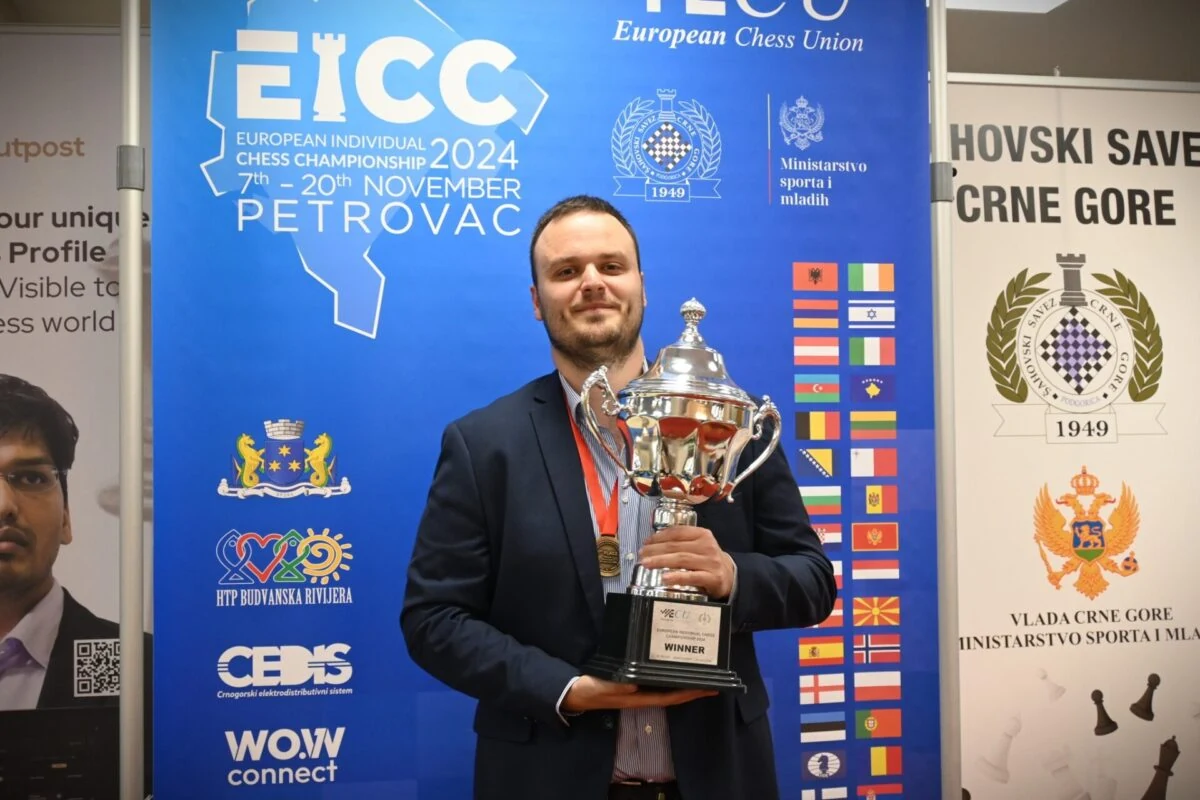
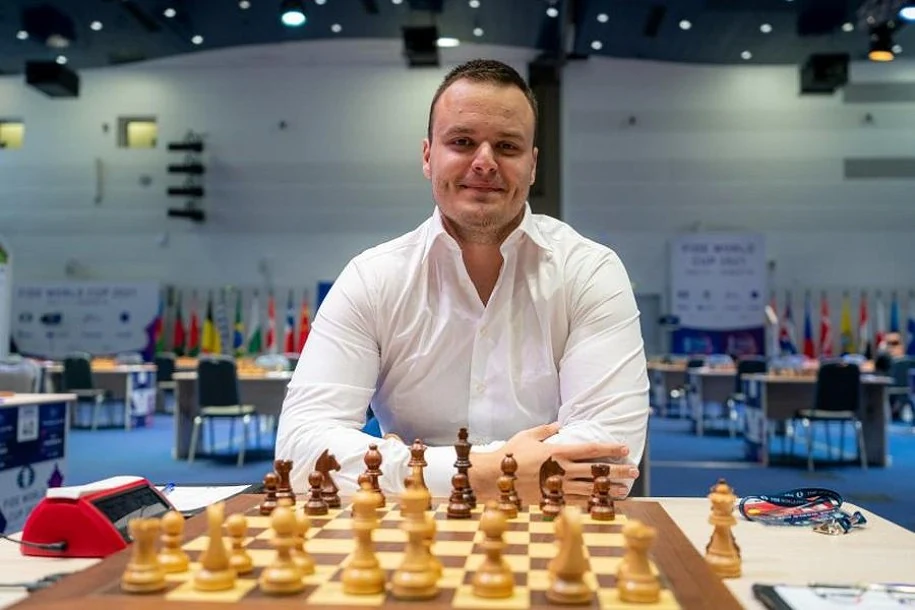
Serbian grandmaster Aleksandar Inđić achieved one of the greatest recent successes in Serbian chess by winning the title of 2024 European Individual Champion.
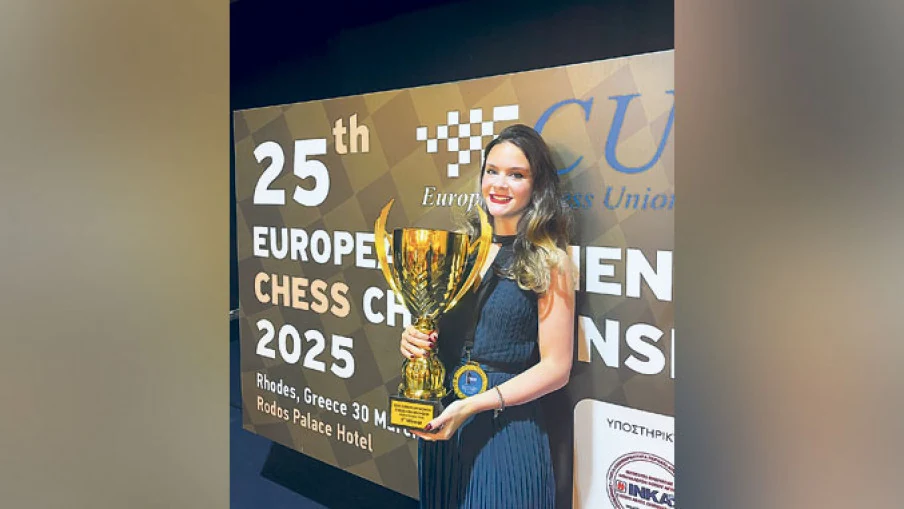
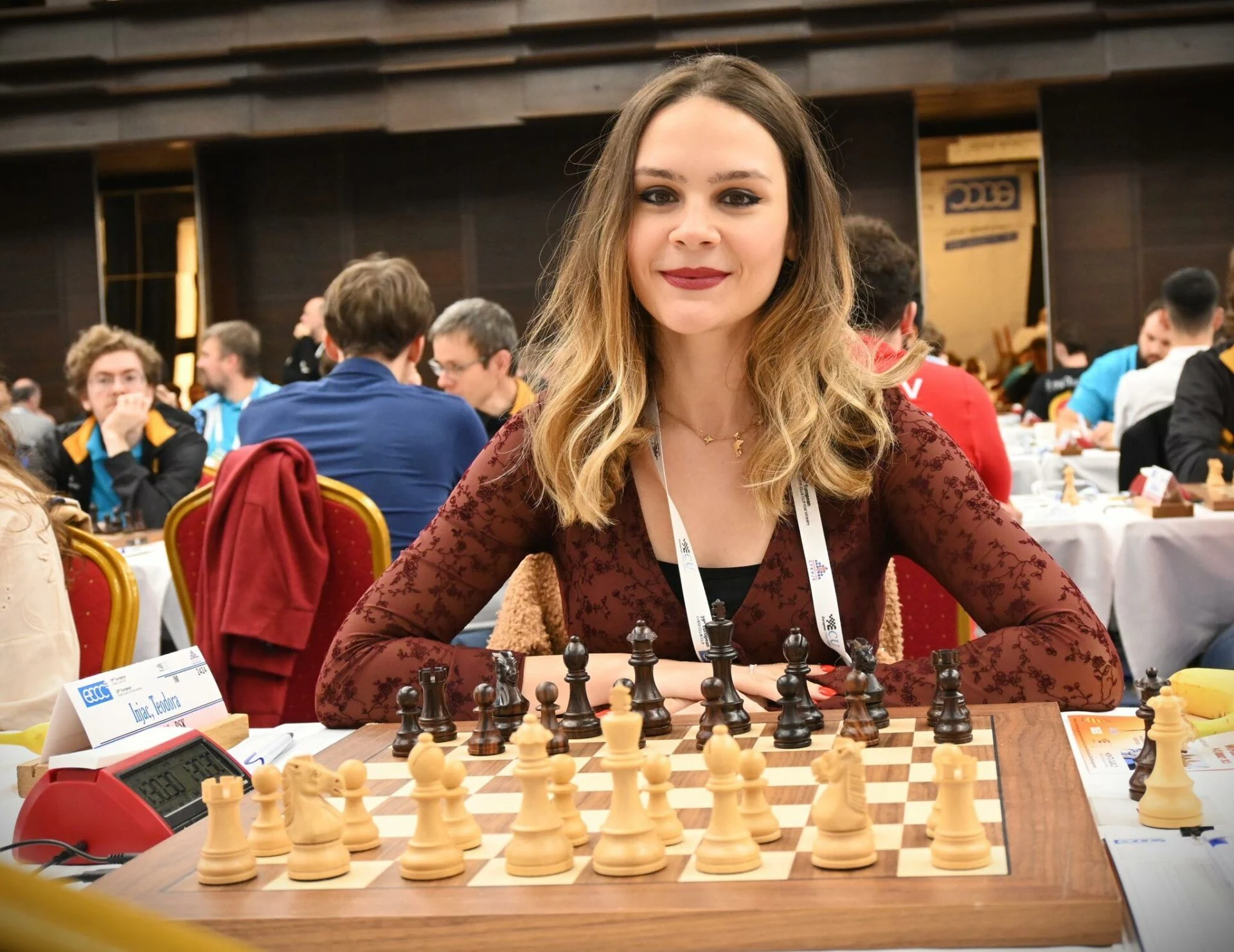
Just one year later, Teodora Injac delivered another outstanding result for Serbian chess by becoming the 2025 European Women’s Individual Champion. She won European gold in impressive fashion with a streak of nine consecutive victories.