What Is Chess?
- Chess is played by two players.
- White always makes the first move.
- The players move alternately.
- The goal is to checkmate the opponent’s king.
A short, clear and practical guide for everyone learning chess: the board, pieces, piece movement, check, checkmate, stalemate, special moves, draws, the clock, notation and sportsmanship.
These are the rules every child should know before playing a first serious game.
The king is never removed from the board. If the opponent’s king has no legal defense against check, it is checkmate and the game is over.
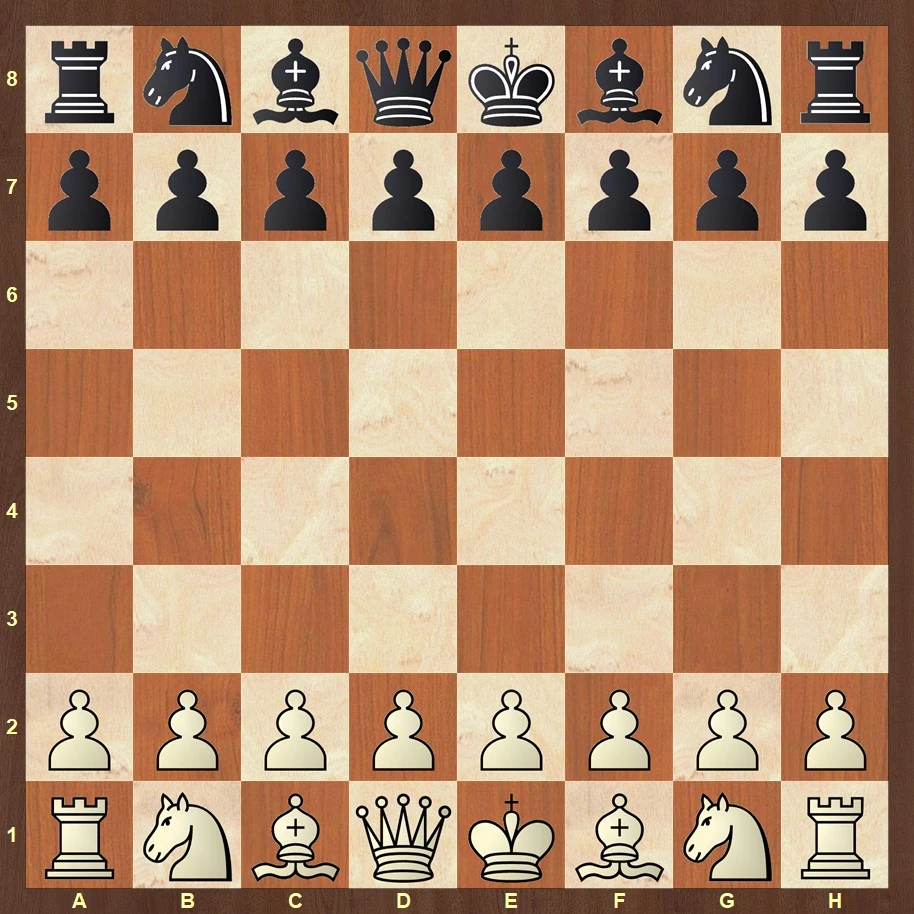
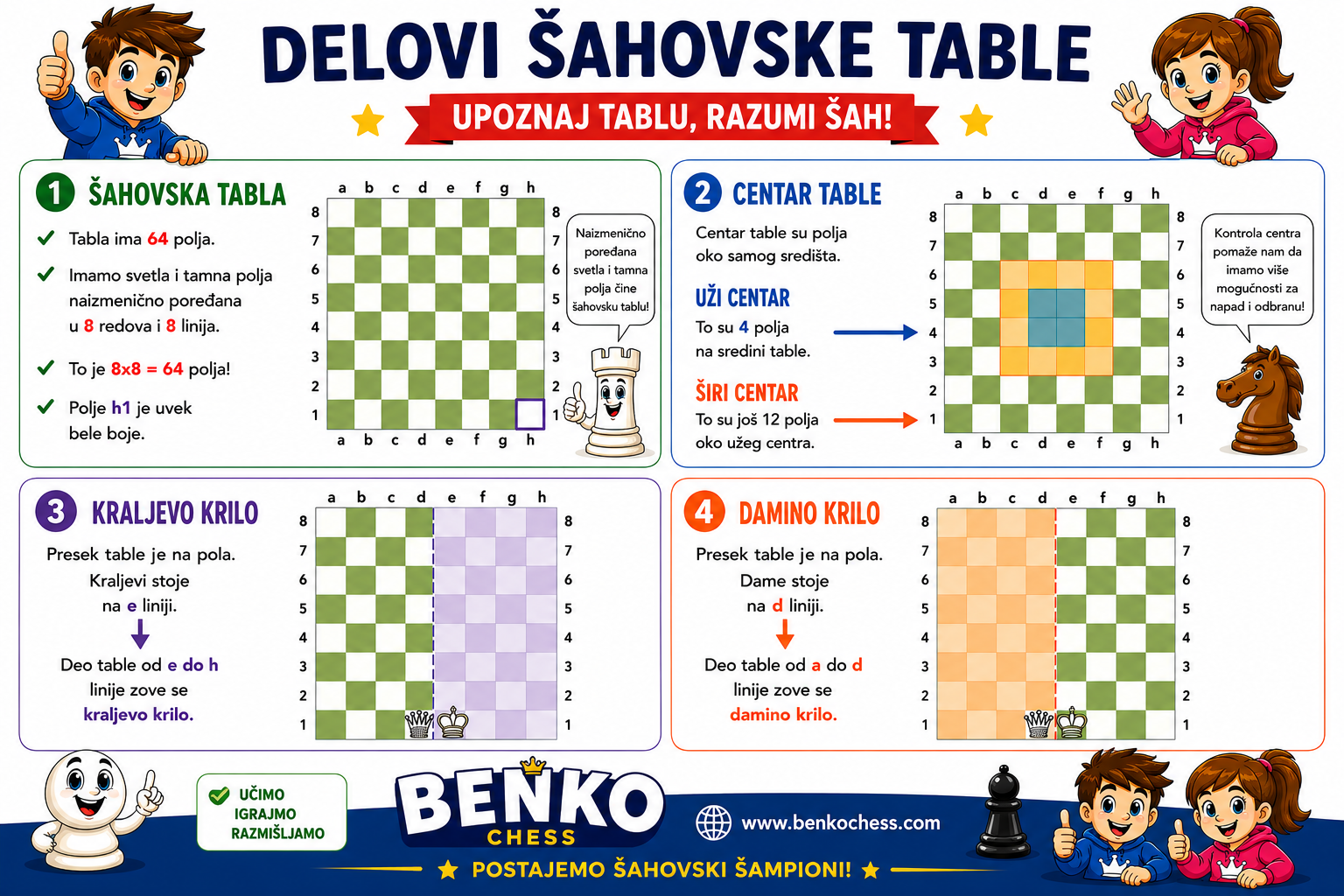
The board has 64 squares: 32 light and 32 dark. It is important for a student to know the correct board orientation, files, ranks and diagonals.
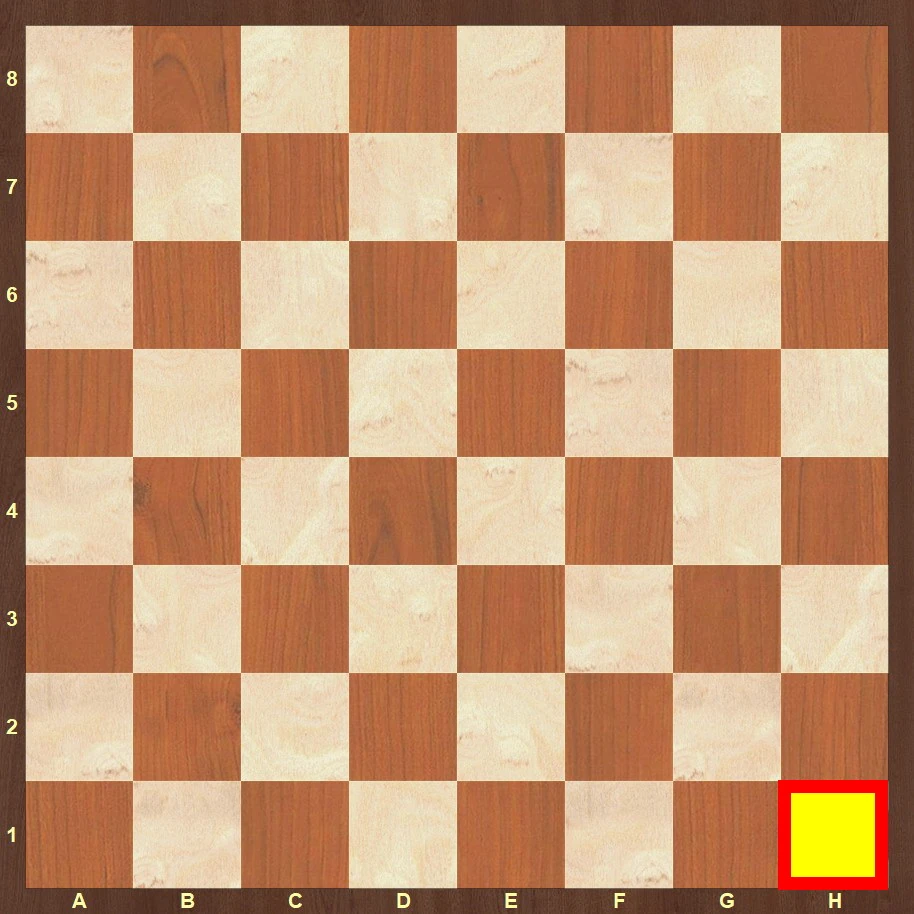
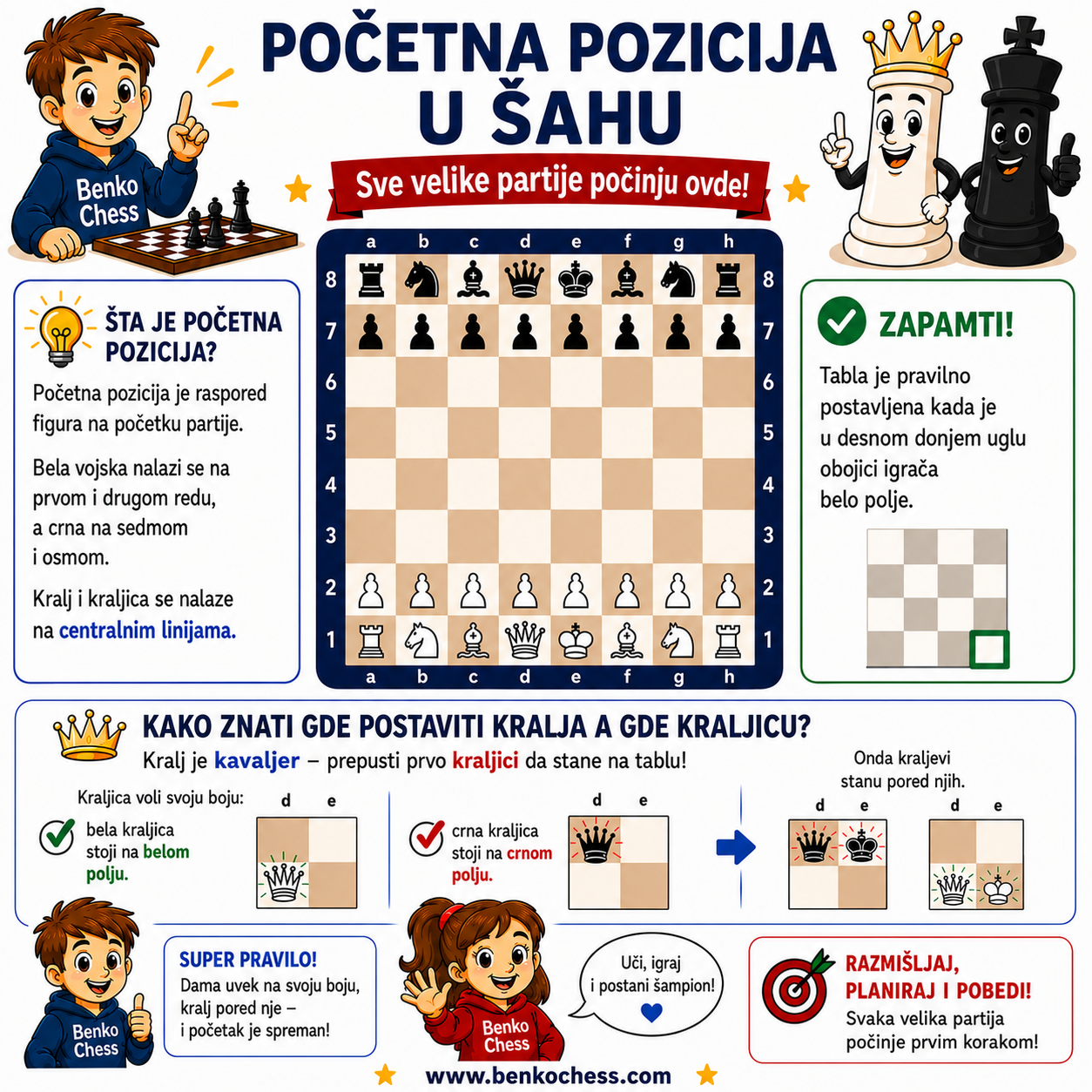
Rule: when you place the board in front of you, the bottom-right square must be white.
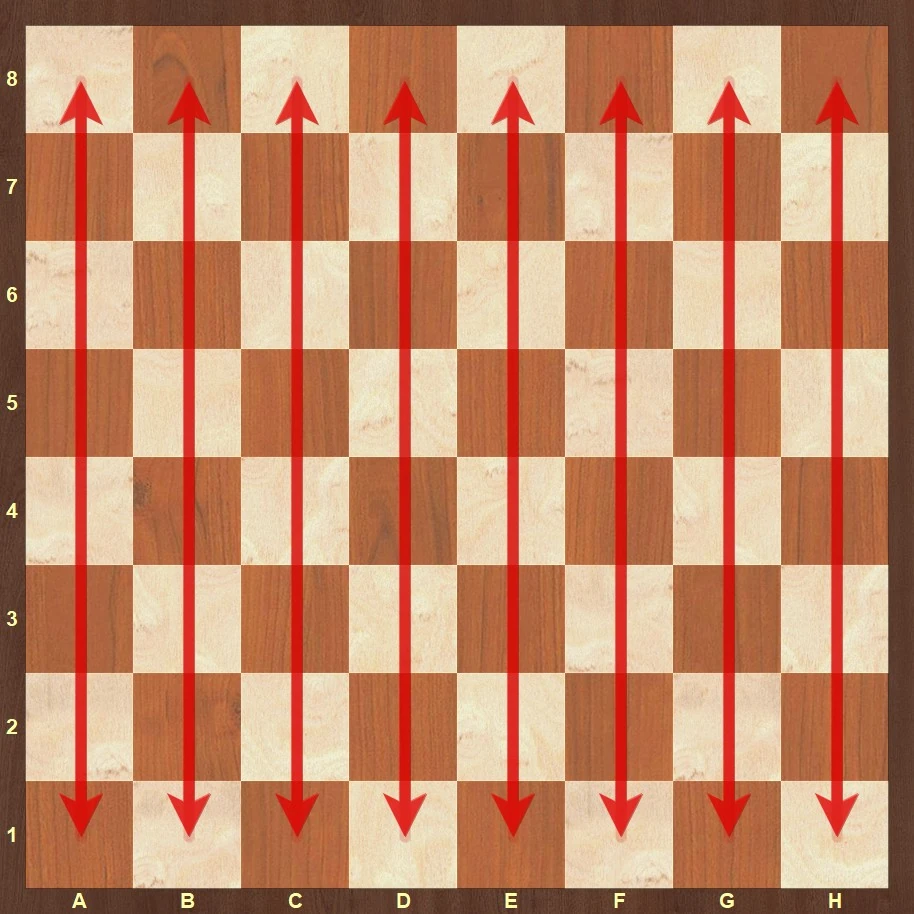
Files run vertically from White toward Black and are labeled a–h.
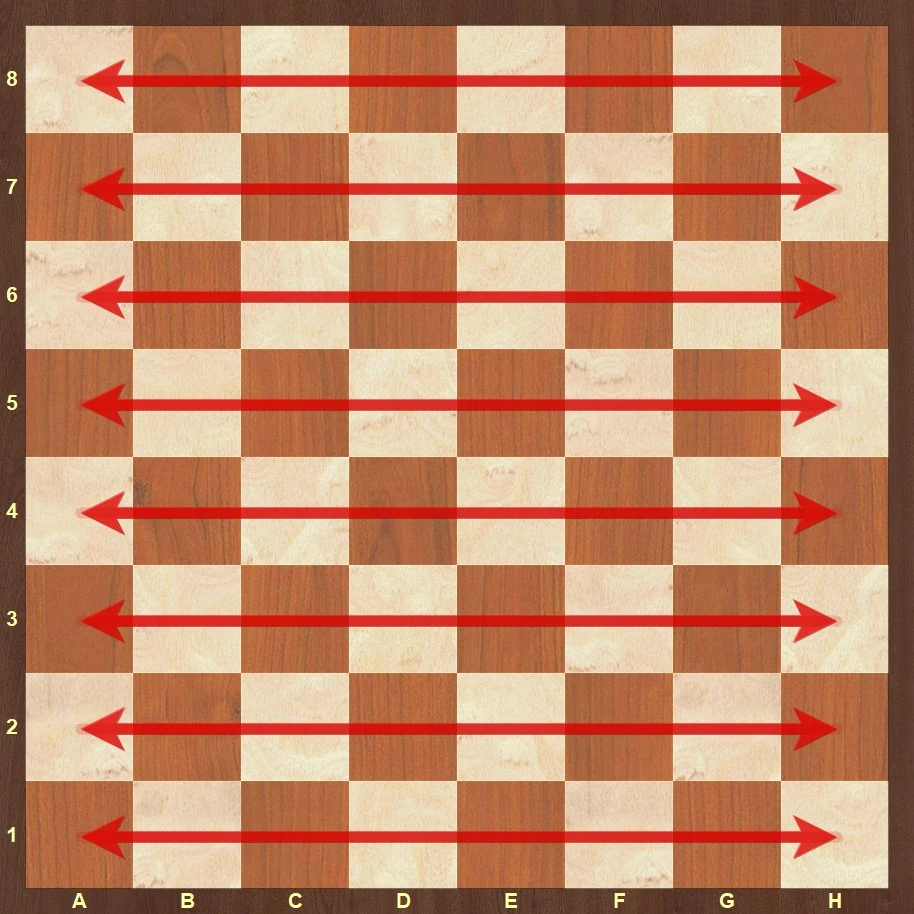
Ranks run horizontally and are numbered 1–8.
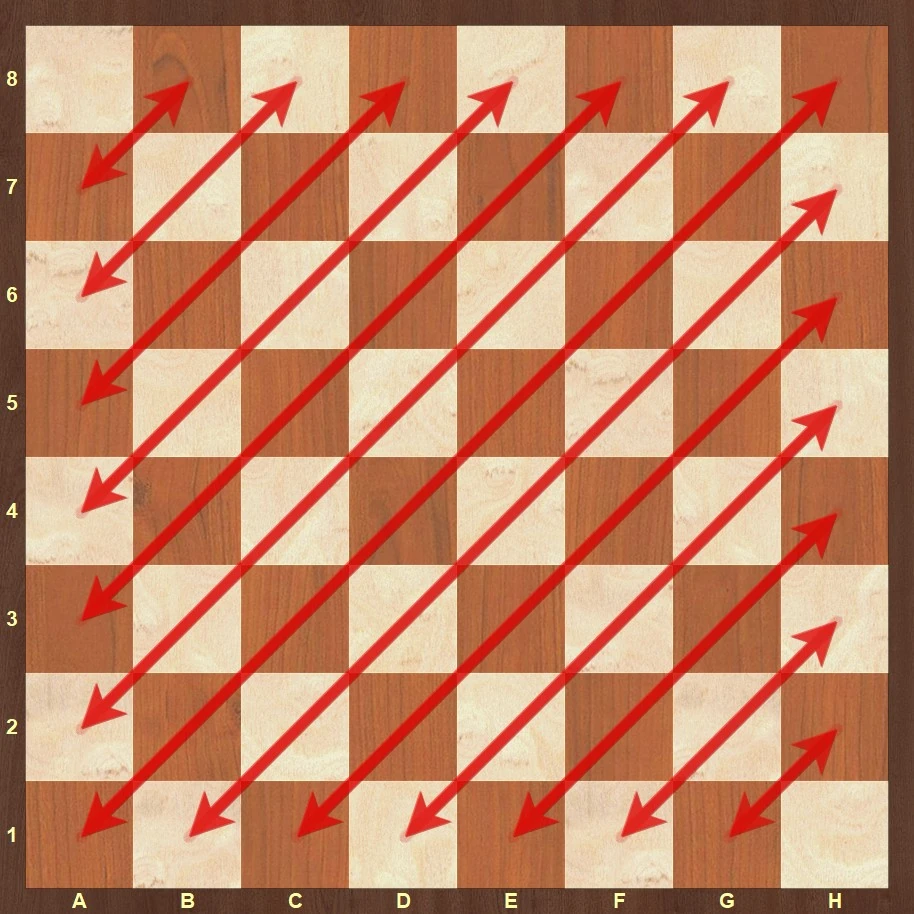
Diagonals connect squares of the same color and run diagonally across the board.
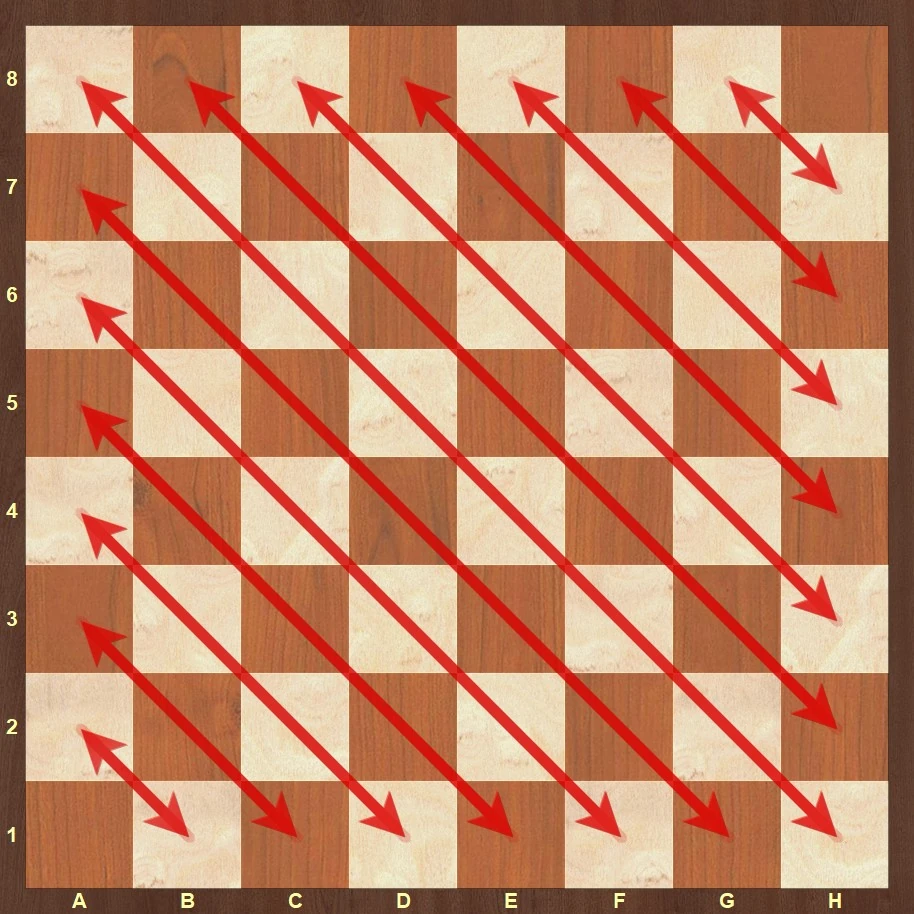
Diagonals run in both diagonal directions. Bishops move along diagonals.
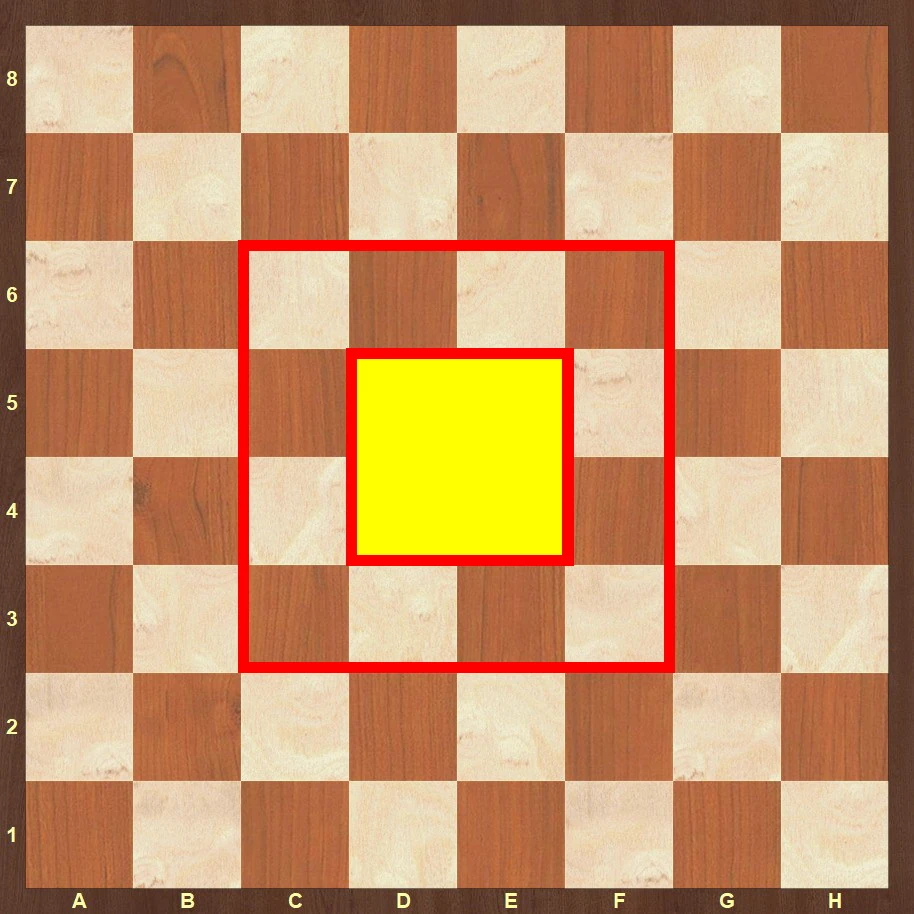
Center is the most important part of the board. The small center consists of d4, e4, d5 and e5, while the extended center covers the 16 central squares.
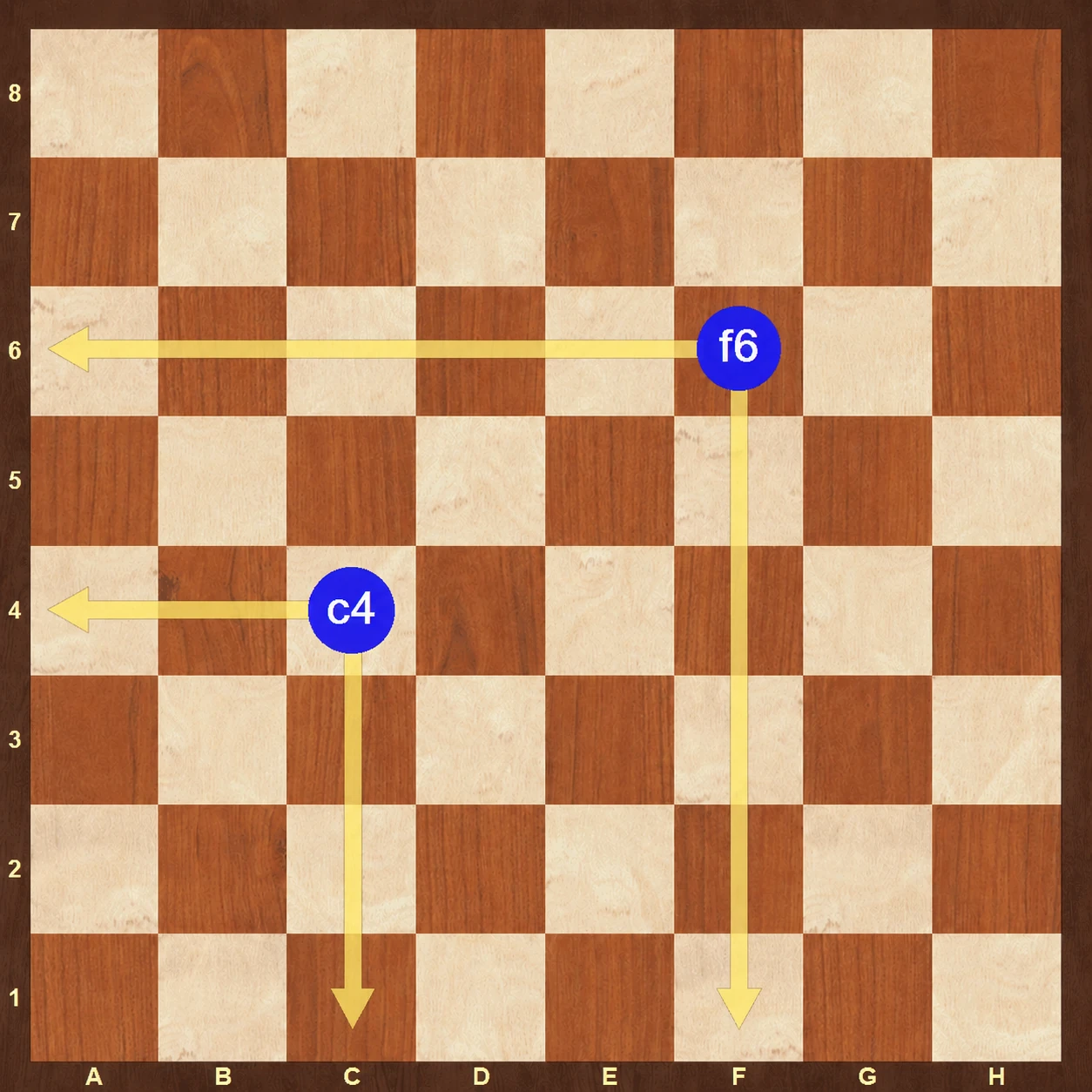
Every square has a coordinate made of a letter and a number, for example e4, d5 or h8.
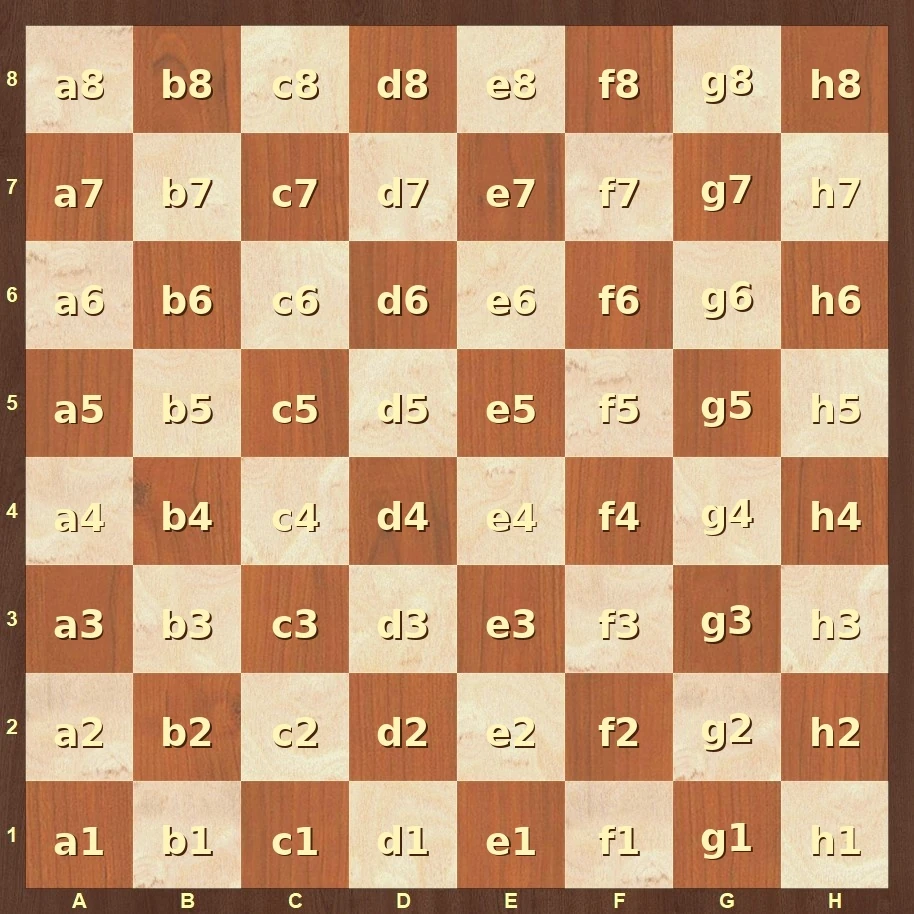
Algebraic notation helps us record a move precisely: the piece, destination square, capture, check, checkmate and castling.
Before the first game, a student should know where the pieces start and how each piece moves.
Each piece moves in a different way. Here are the basic movement rules.
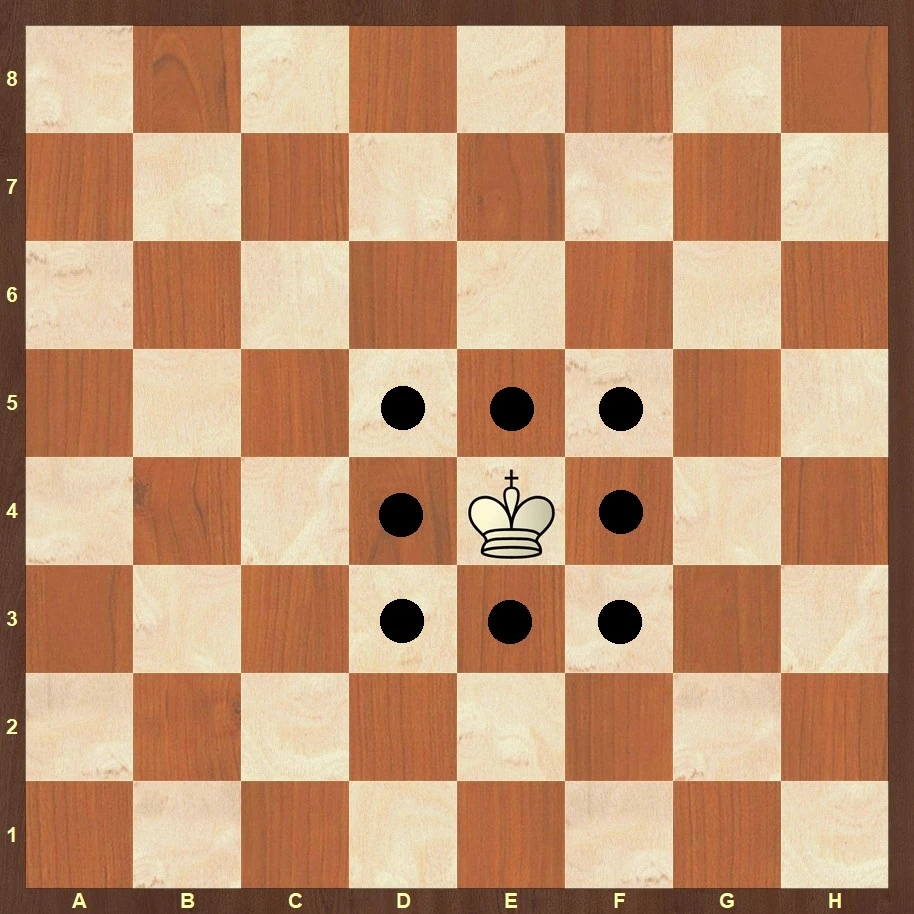
King moves one square in any direction. The king may not move onto an attacked square.
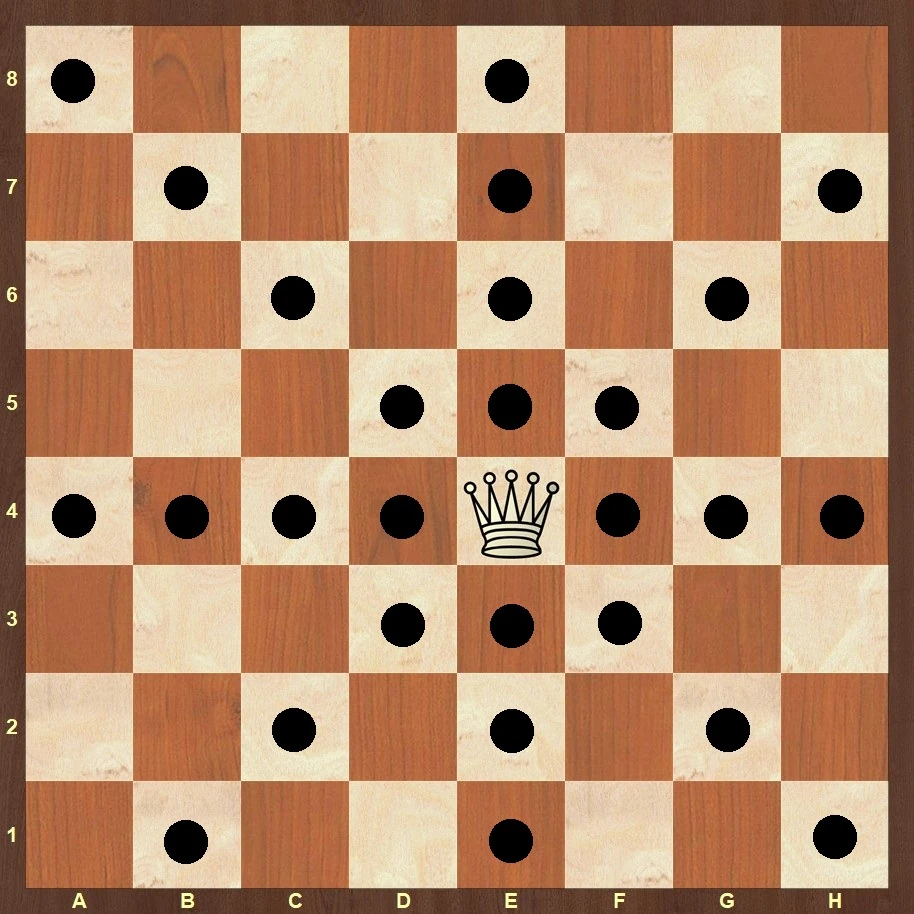
Queen moves along files, ranks and diagonals. It is the most powerful piece.
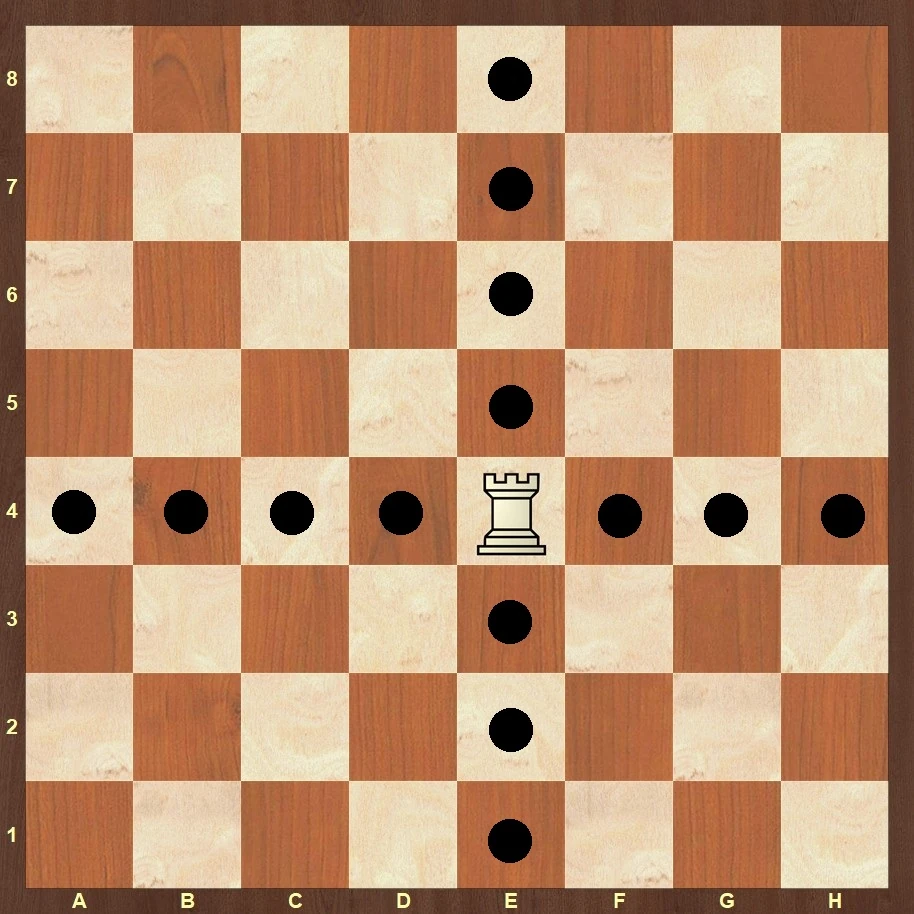
Rook moves straight along files and ranks.
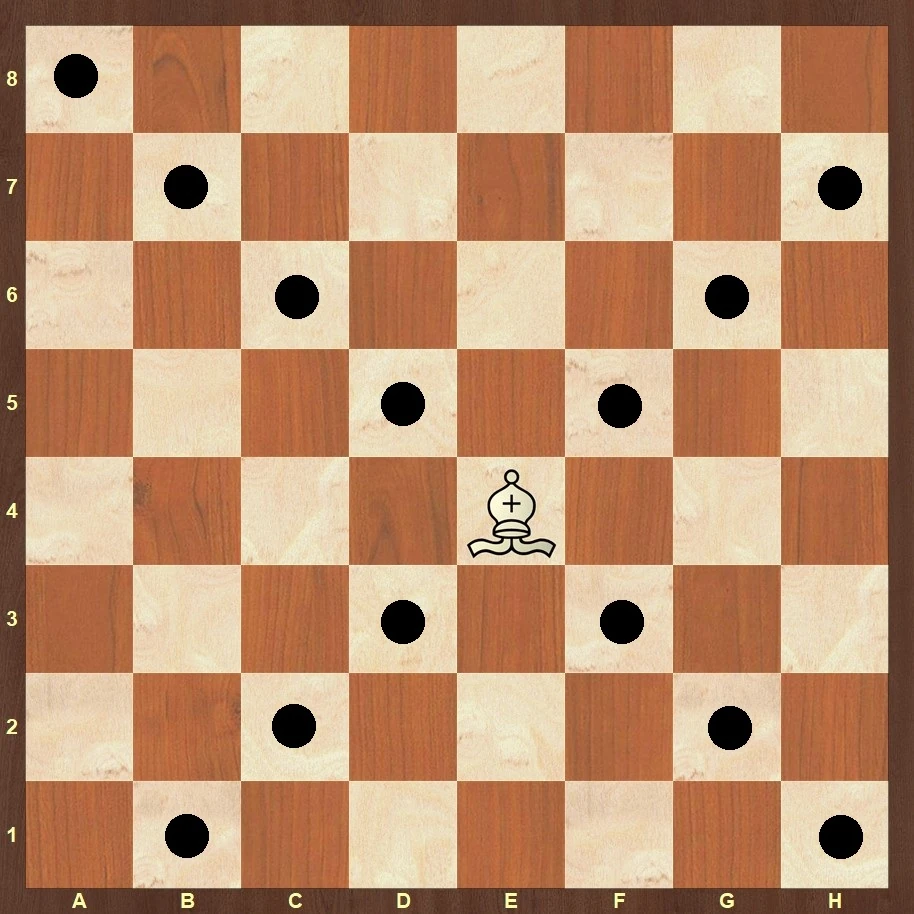
Bishop moves only along diagonals. One bishop stays on light squares and the other stays on dark squares.
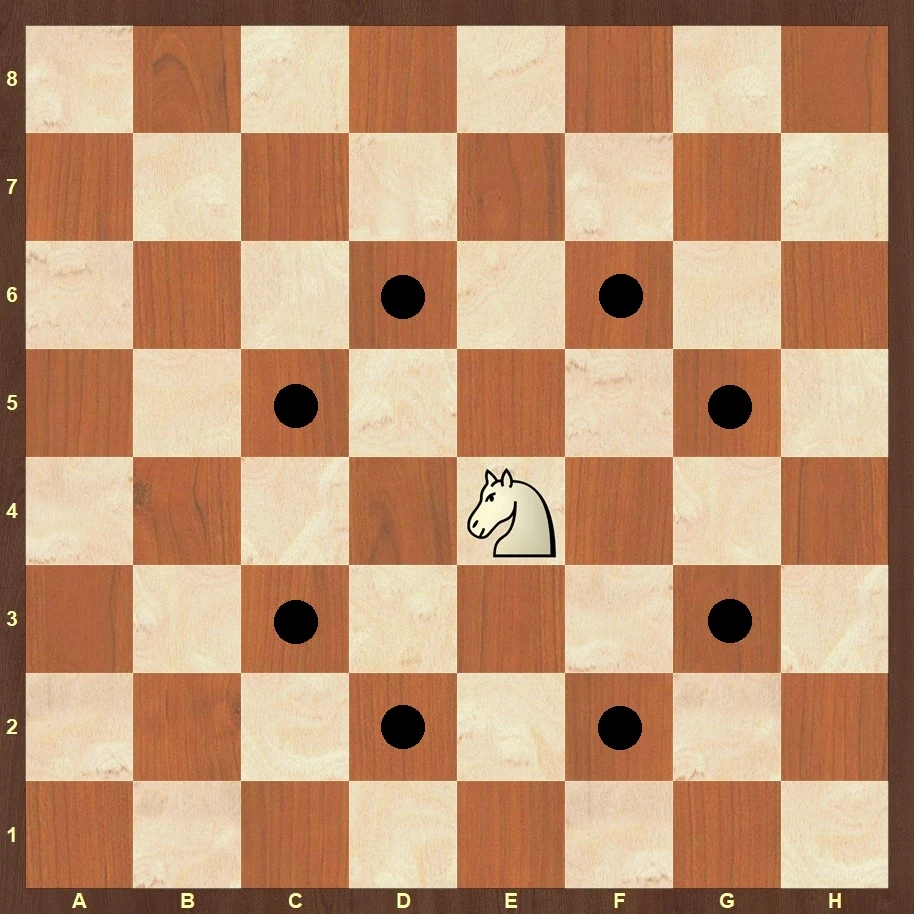
Knight moves in an L-shape and is the only piece that can jump over other pieces. After every move it lands on a square of the opposite color.
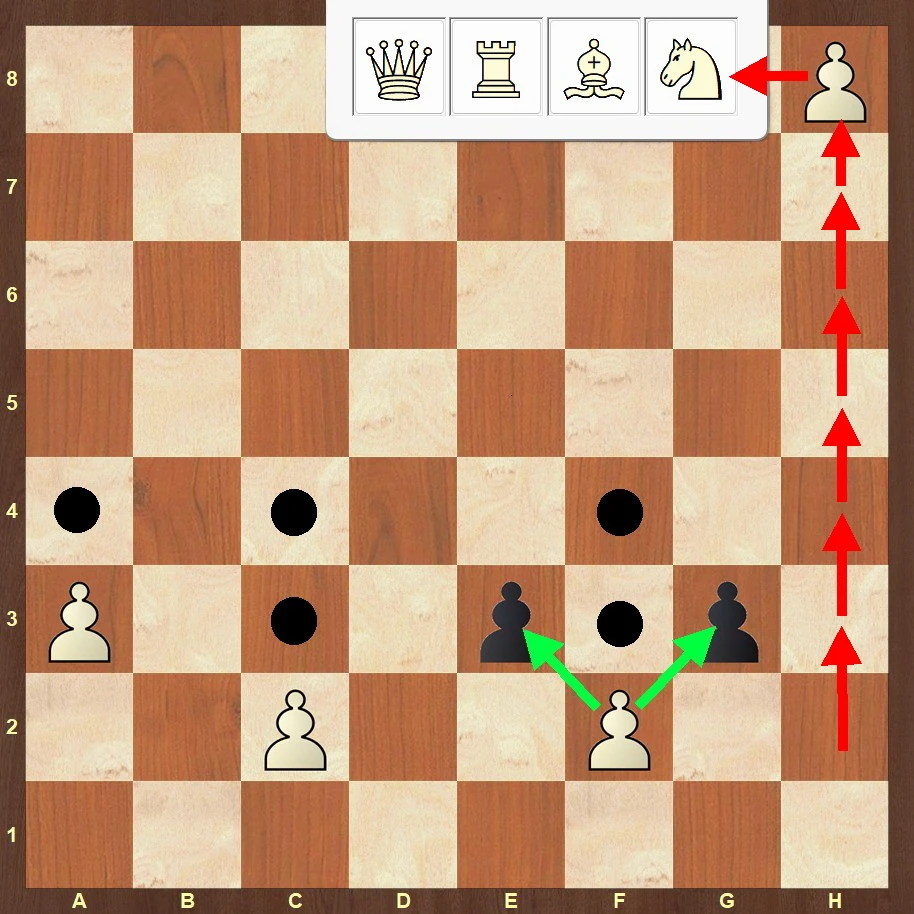
Pawn moves straight forward and captures diagonally. From its starting square it may move one or two squares. When it reaches the last rank, it is promoted to a queen, rook, bishop or knight.
Four short lessons that help students understand the board, pieces, movement, attacks, captures and pawns more easily.
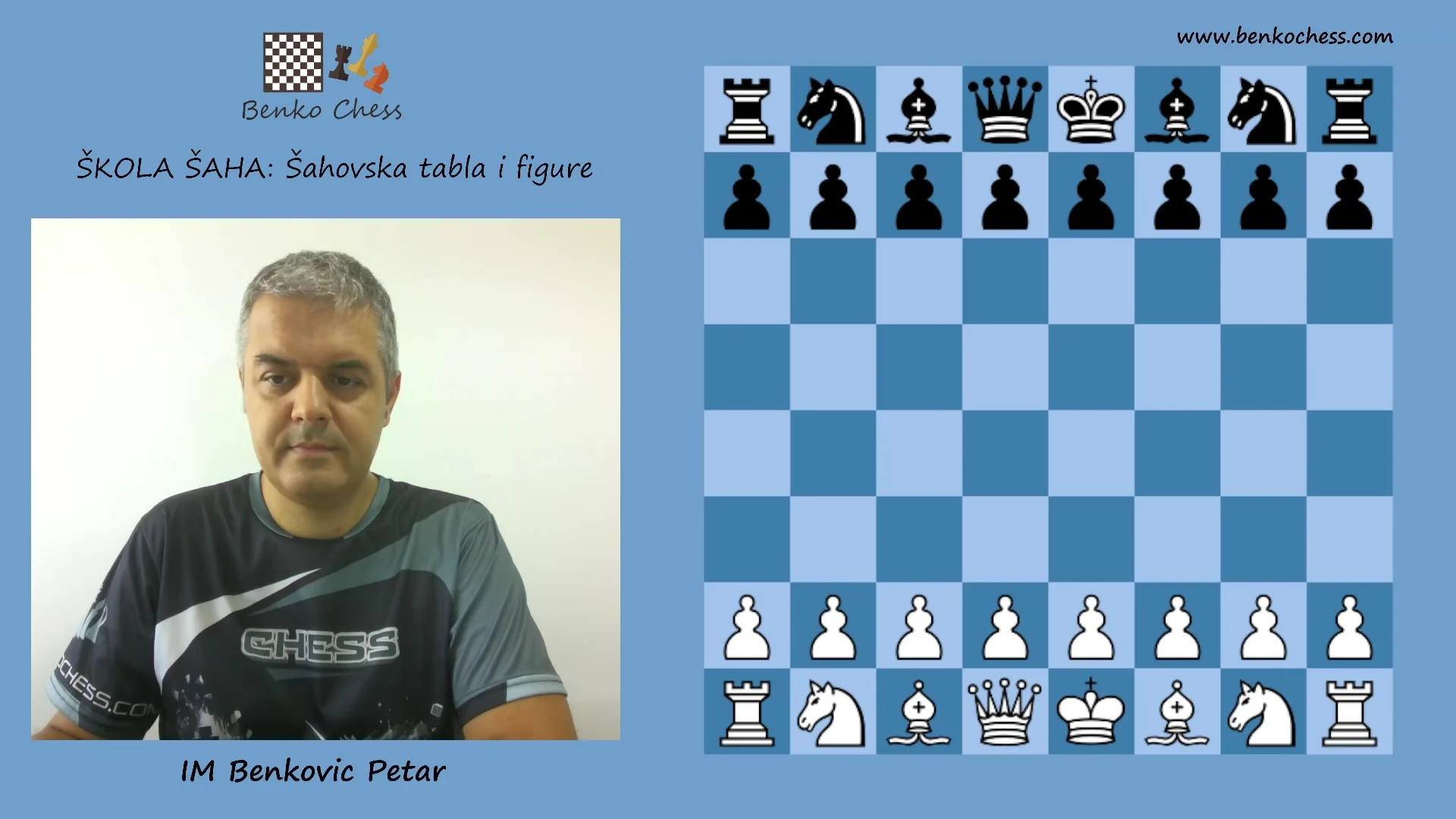
An introduction to the chessboard, squares and basic pieces.
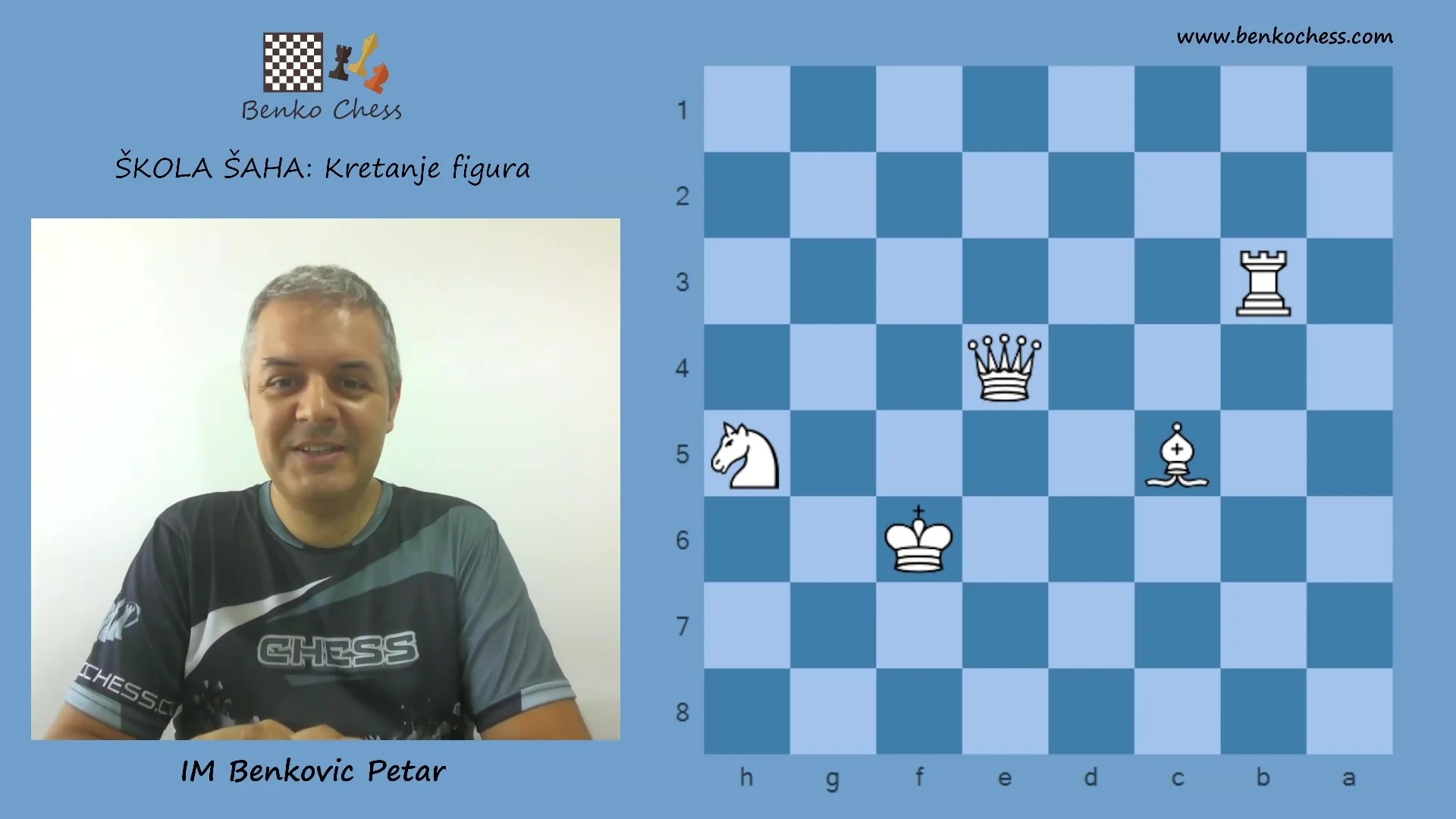
How the king, queen, rook, bishop, knight and pawn move.
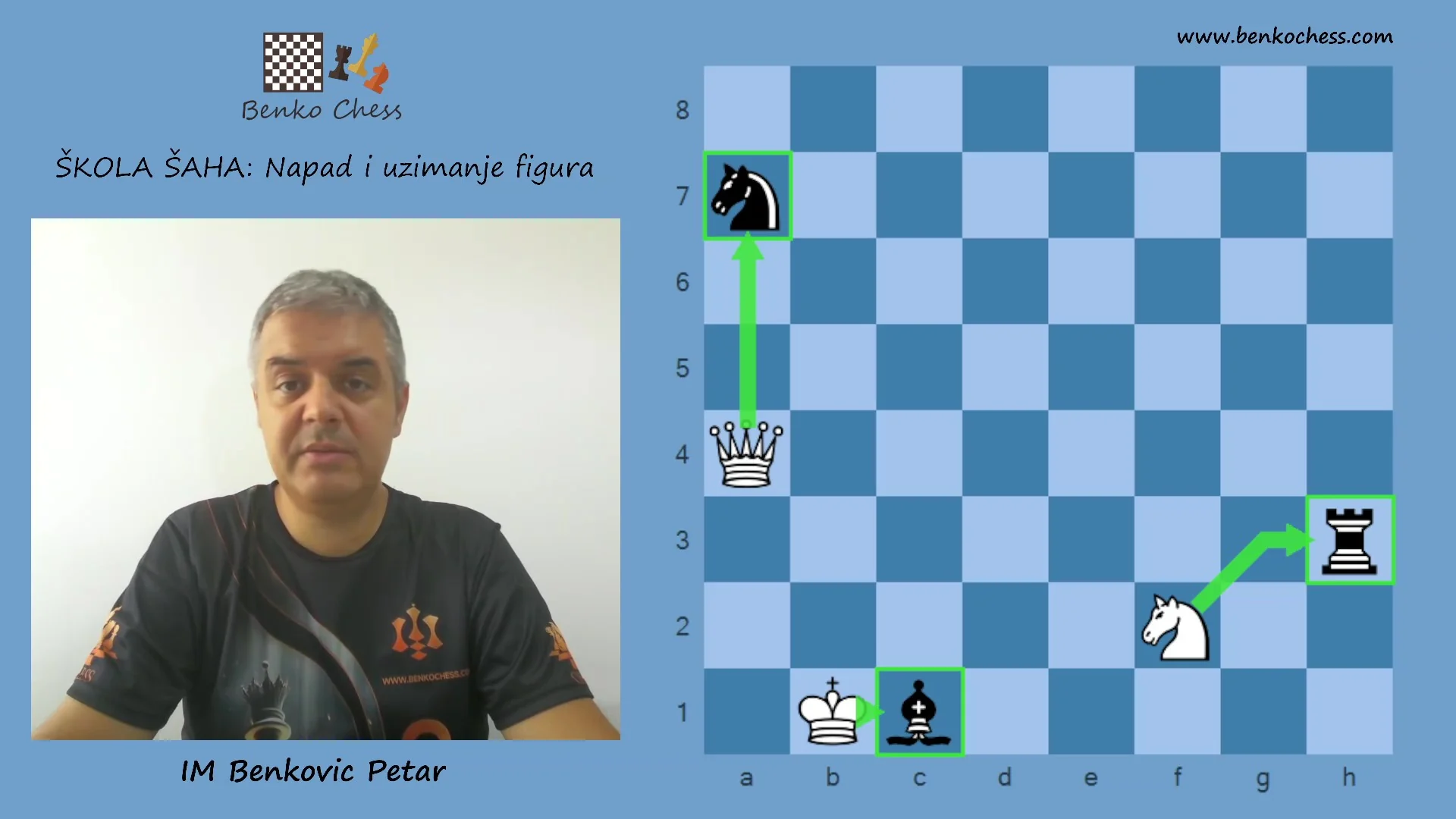
Basic rules of attack, defense and capturing enemy pieces.
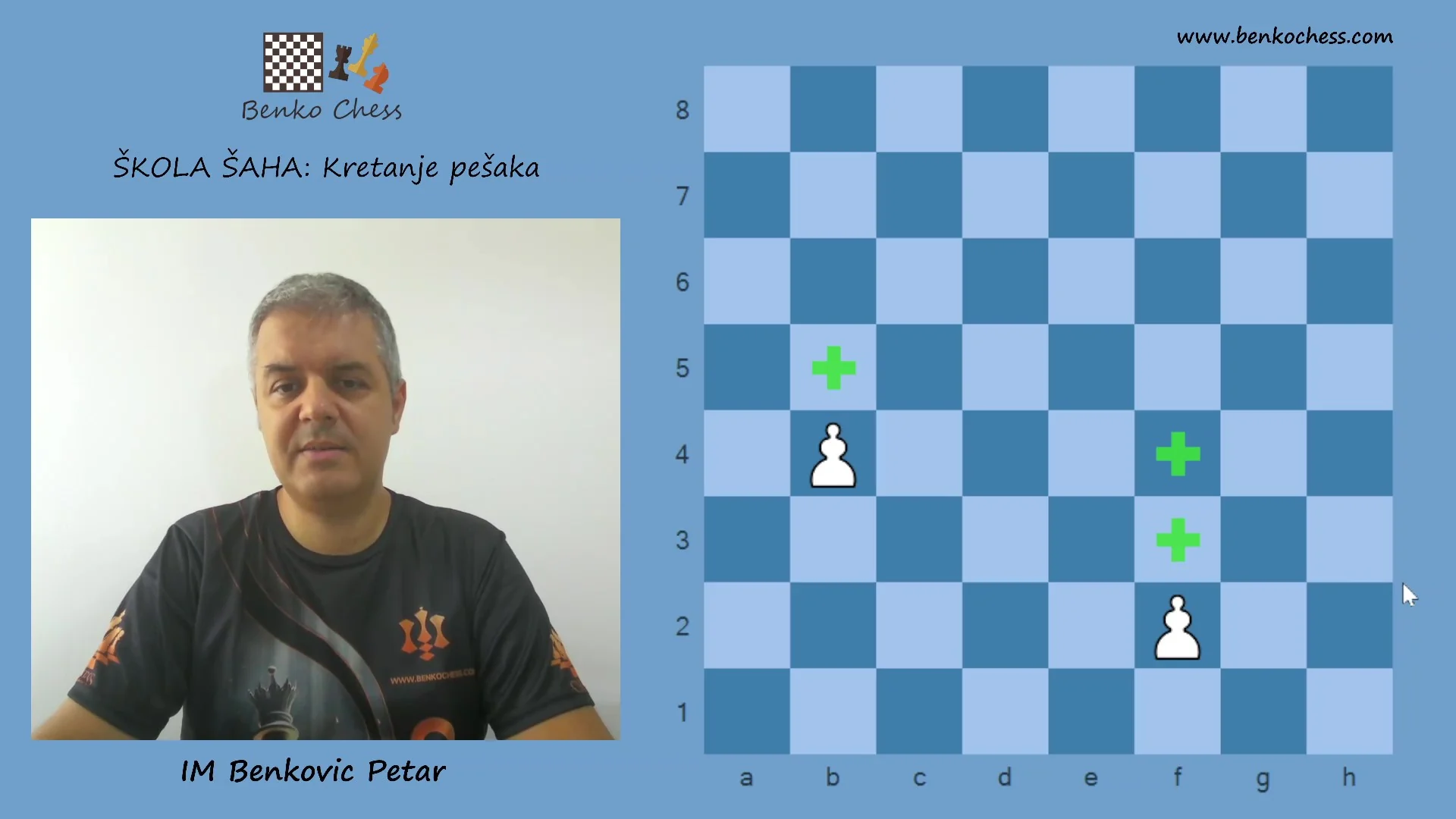
Pawns move in a special way: forward, capture diagonally and have important special rules.
These are three of the most important concepts for ending a game and keeping the king safe.
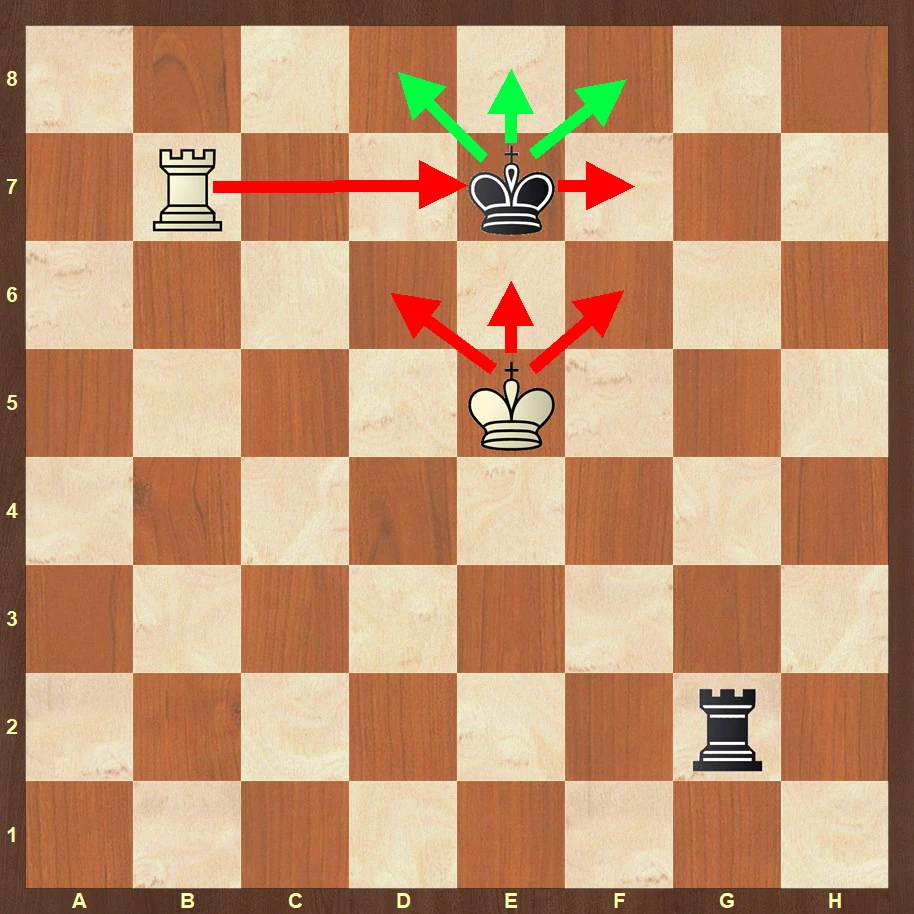
Check is an attack on the king. When the king is in check, the player must immediately find a legal defense.
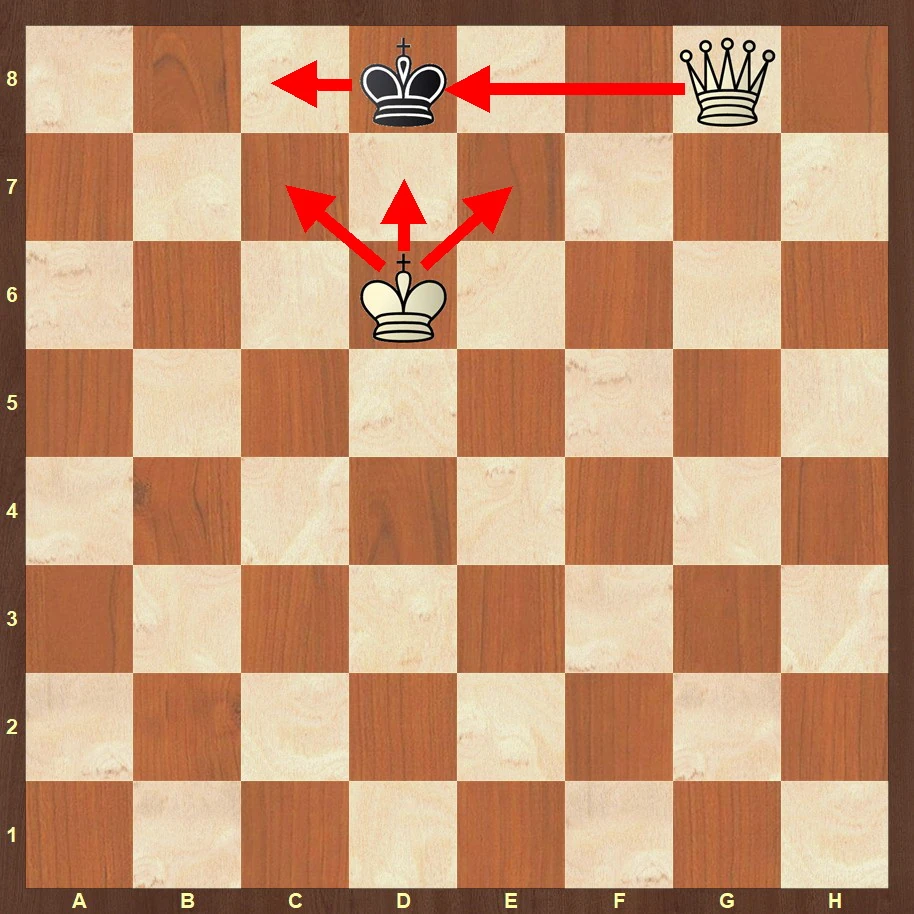
Checkmate is a position in which the king is attacked and has no legal way to escape. Checkmate ends the game.
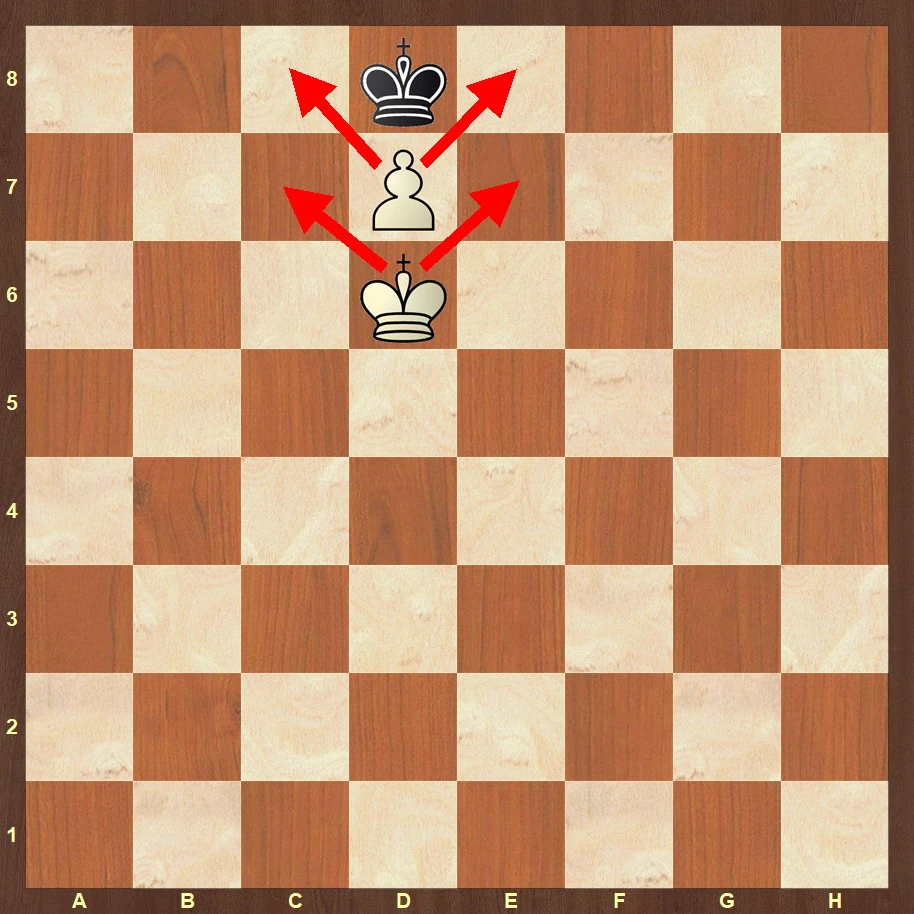
Stalemate is a position in which the player is not in check but has no legal move. The game is drawn.
Castling, promotion and en passant are rules that beginners often confuse, so they should be learned separately.
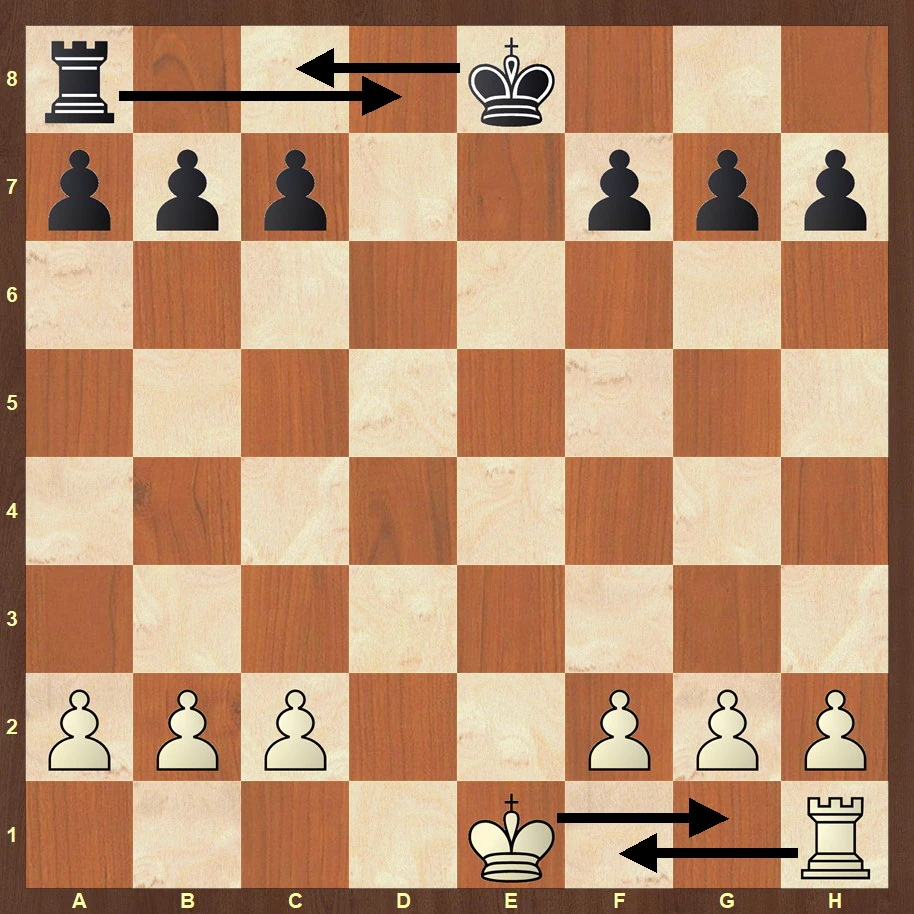
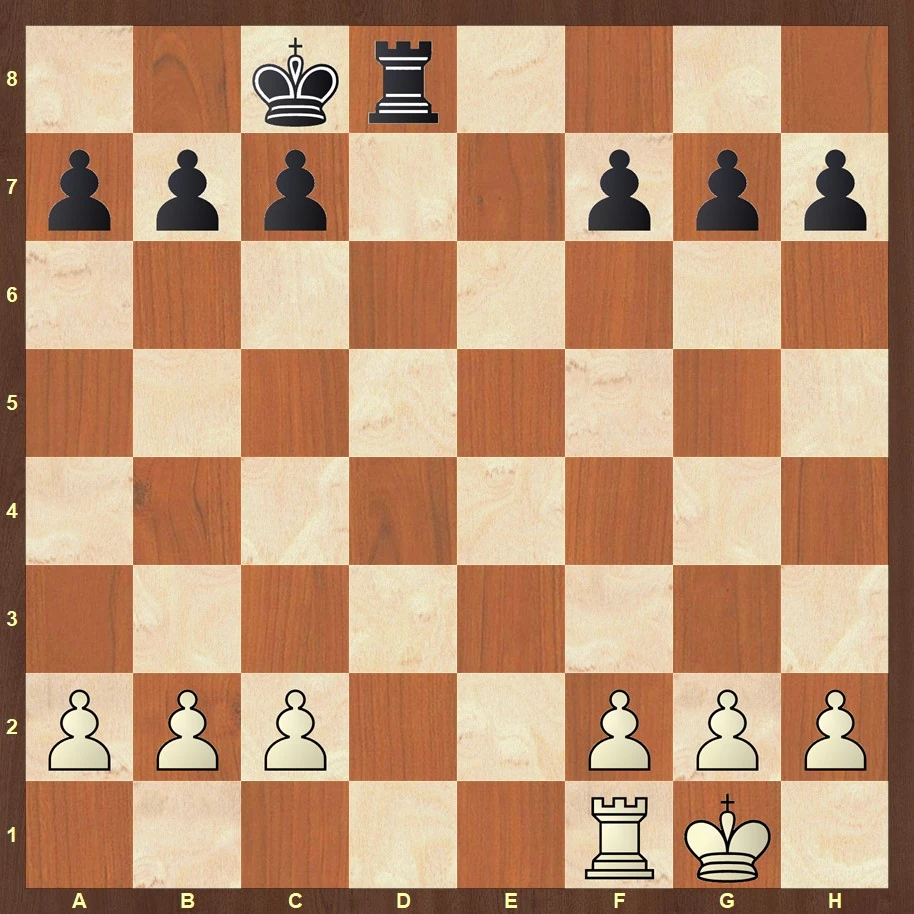
Castling is a special move involving the king and rook. The king moves two squares toward the rook, and the rook then moves over the king so that the two pieces end up next to each other. If you touch the rook first, you may not castle on that move and must move the rook under the touch-move rule.
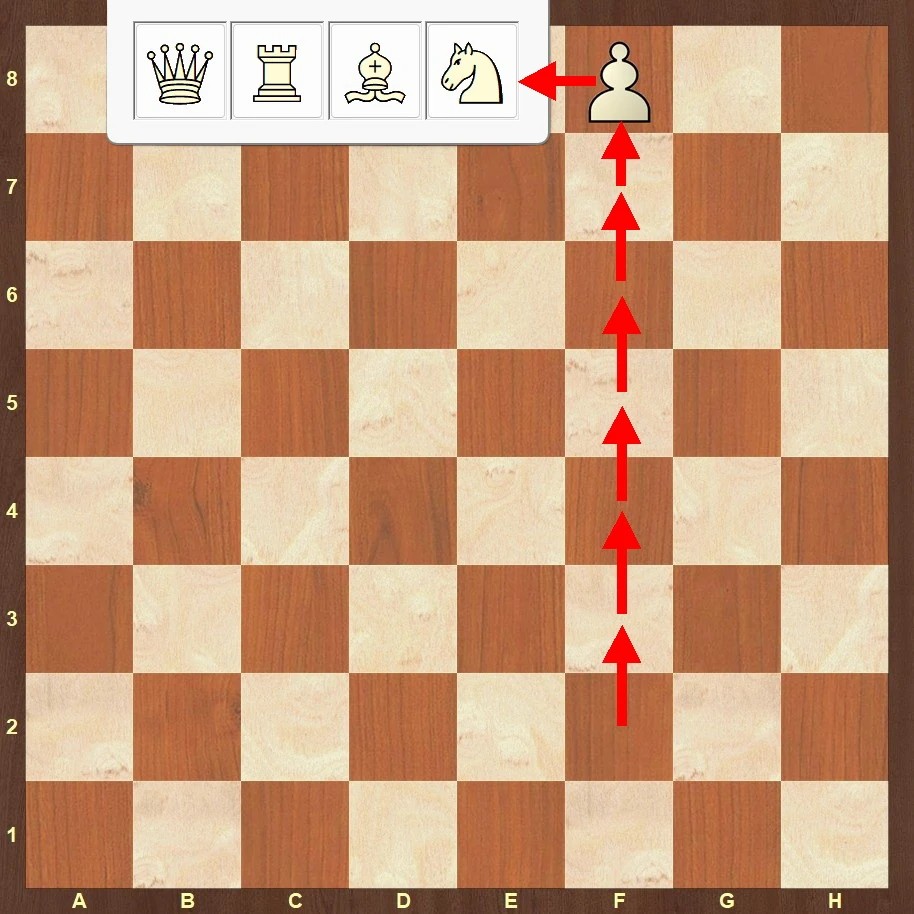
When a pawn reaches the last rank, it must immediately be replaced by a queen, rook, bishop or knight of the same color.
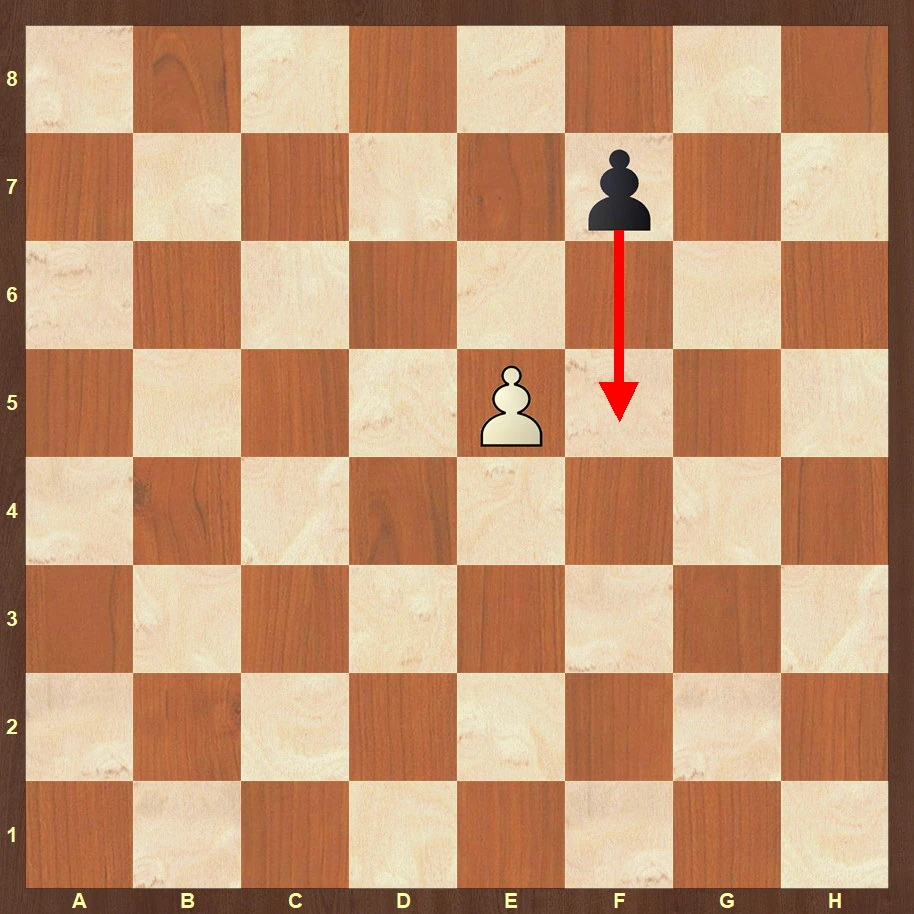
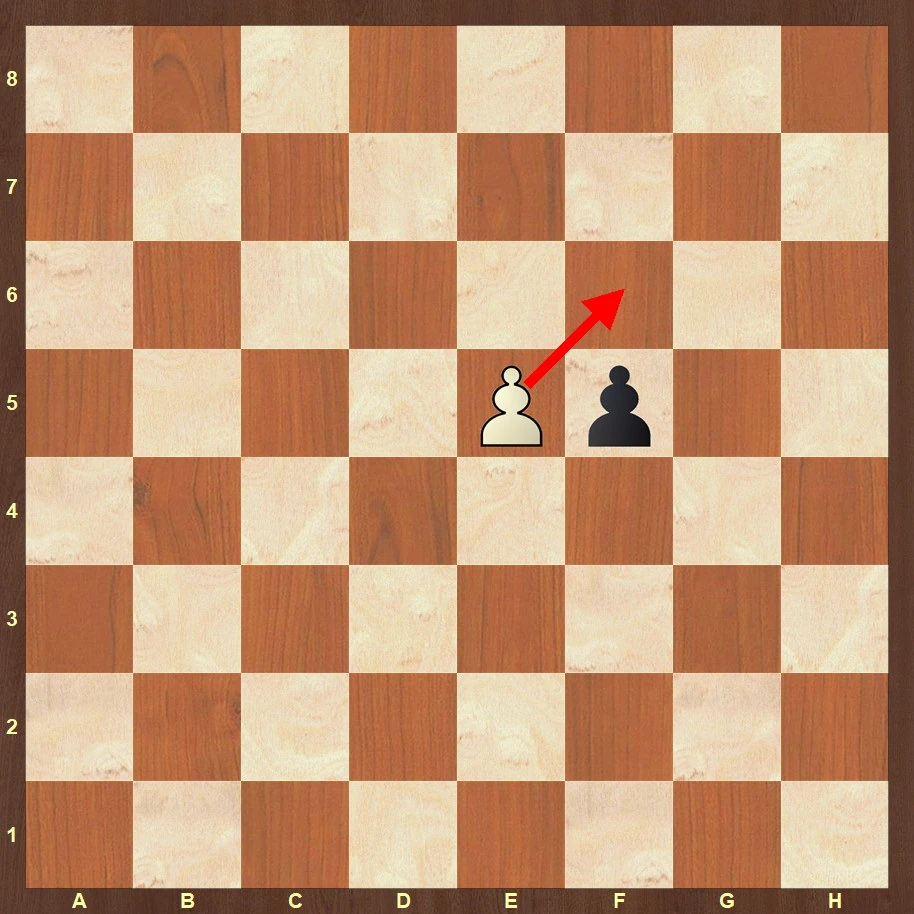
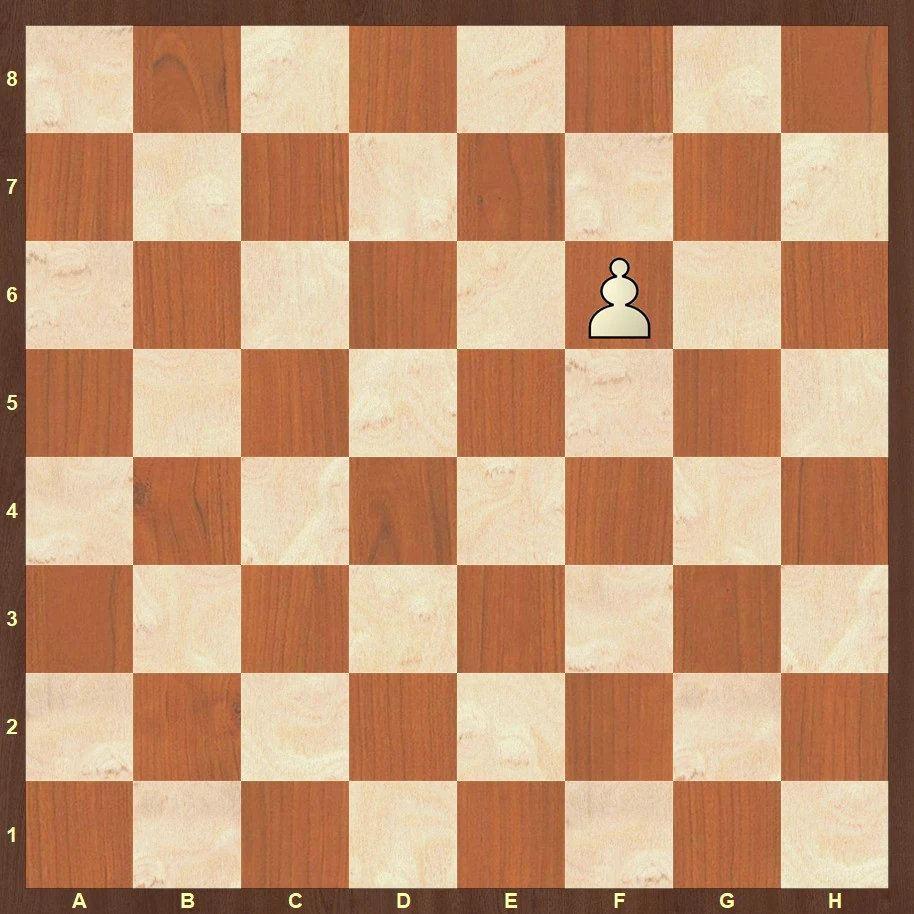
When an opponent’s pawn moves two squares forward from its starting position and passes over a square attacked by your pawn, your pawn may capture it en passant. This right exists only immediately; if it is not used on that move, en passant is no longer possible.
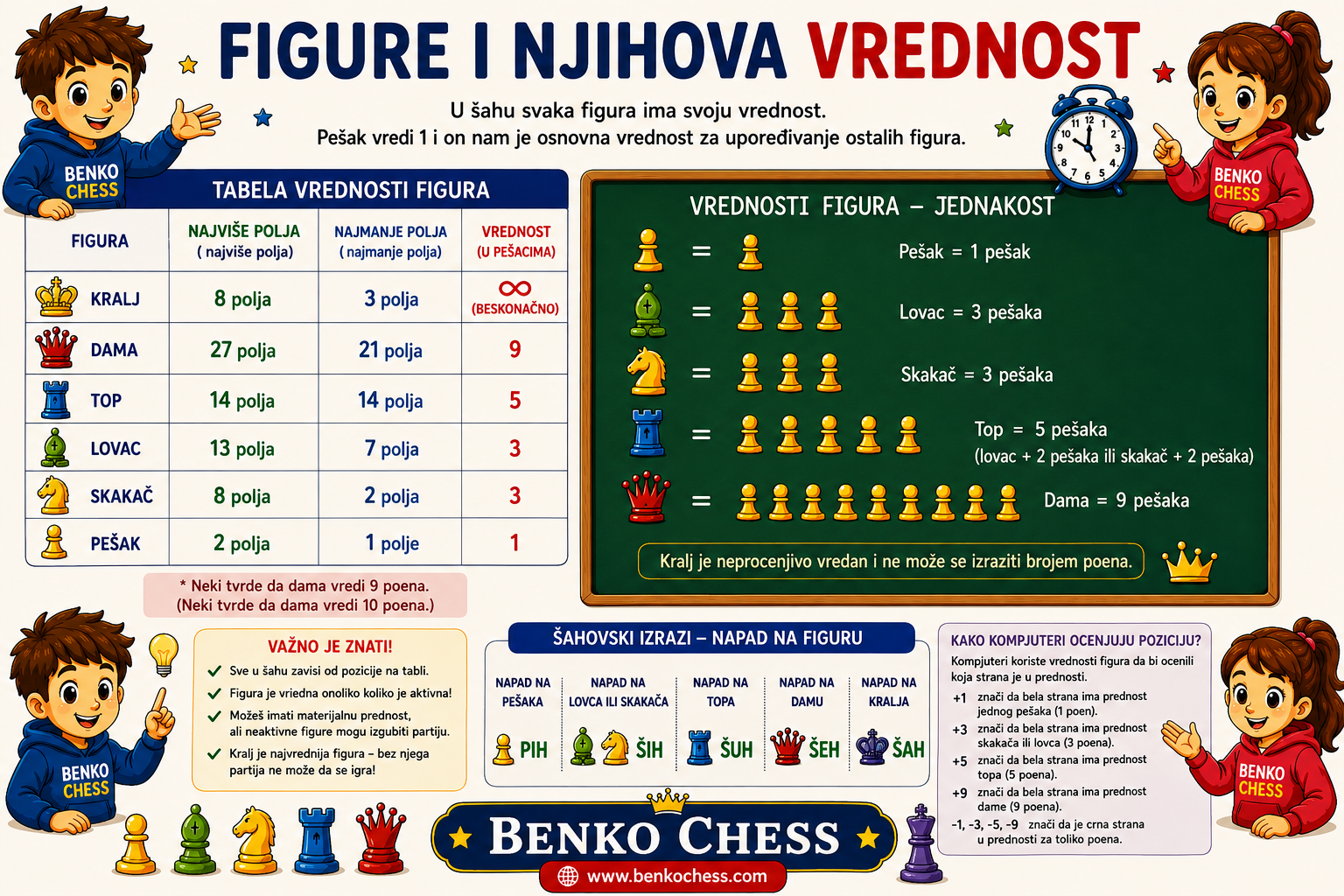
Piece values help beginners evaluate material on the board, but in chess the activity of the pieces is extremely important.
In practice, the pawn is used as the basic unit and is worth 1. A bishop and knight are usually valued at 3 pawns, a rook at 5, and a queen at 9. The king is the most important piece: without the king the game cannot be played, so its value is not expressed numerically.
These values are only guidelines. Everything depends on the position: an active piece can be more valuable than a passive piece with no useful role in the game.
In a friendly game we may point out that an opponent’s piece is attacked, but in an official tournament players should not talk during the game or disturb the opponent.
A draw does not happen only by agreement between the players. There are several important cases.
| Case | Explanation |
|---|---|
| Stalemate | The player to move is not in check but has no legal move. |
| Draw by Agreement | The players agree to a draw, if the tournament regulations allow it. |
| Threefold Repetition | The same position has appeared, or is about to appear, three times with a correct claim. |
| 50-Move Rule | Both players have made 50 moves without a capture and without moving a pawn. |
| Insufficient Mating Material | Neither side can checkmate even against the opponent’s worst possible play. |
In chess, the rule is simple: think first, then touch the piece.
When it is your turn, you must be careful. Touching a piece usually means that you have already made your decision.
If you only want to center a piece on its square, clearly say “I adjust” or “j’adoube” before touching it.
J’adoube comes from the French expression j’adoube, meaning “I adjust.” When this is said before touching the piece, the player is not required to move that piece.
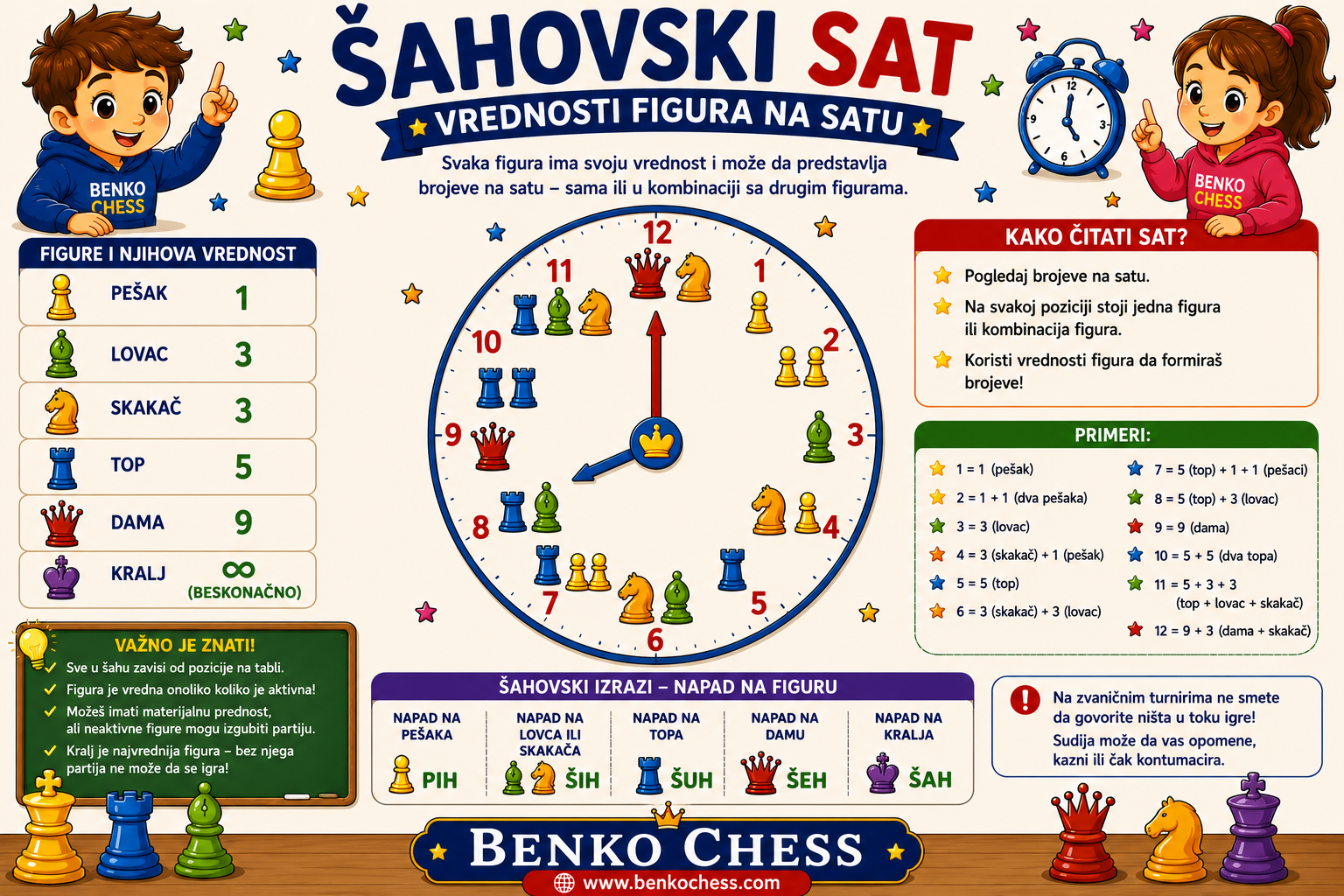
The clock is part of tournament chess. Children should learn to use it calmly and correctly. The Benko Chess digital clock can be used for practical training.
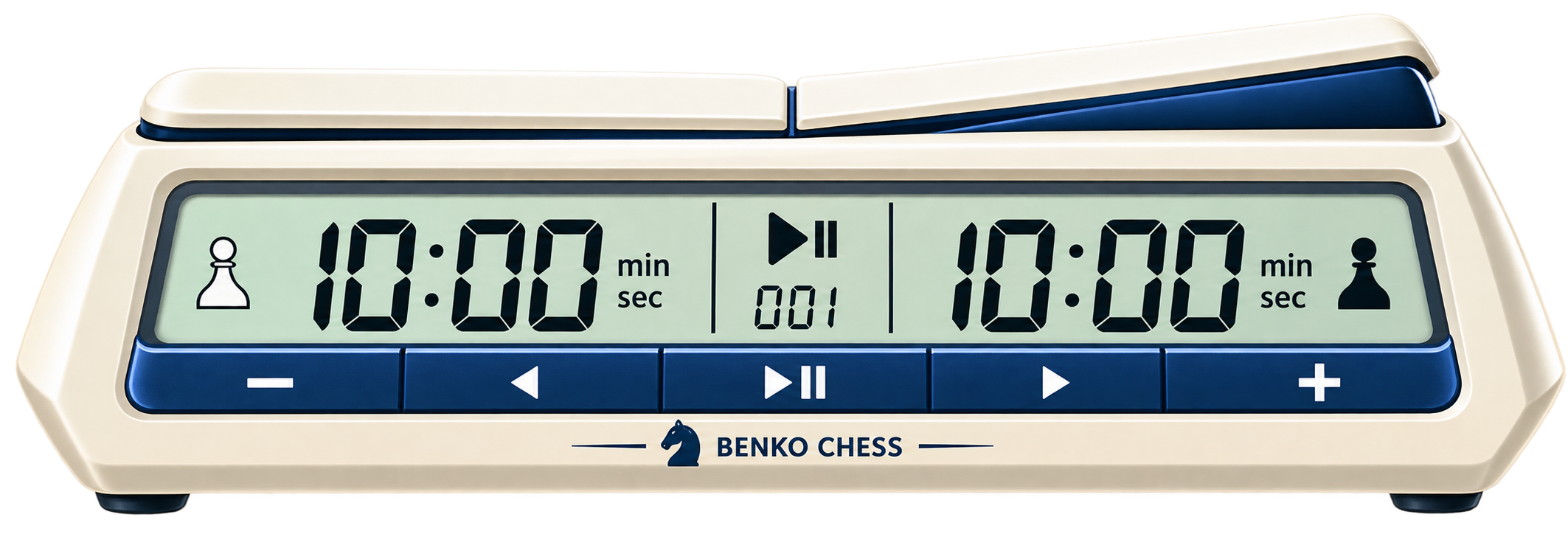
First make the move on the board, then press the clock.
Press the clock with the same hand used to make the move.
Do not hit the clock and do not press it before making a move.
In a tournament, it is important to know what is not allowed.
It is illegal to leave your king in check or make a move that exposes it to attack.
Castling is illegal if the king crosses an attacked square or finishes on an attacked square.
A pawn that reaches the last rank must immediately be replaced by a piece.
In a tournament, a move is made with one hand. The same hand is used to press the clock.
It is not allowed to press the clock without making a move.
If you are not sure, calmly stop the clock and call the arbiter.
A good chess player respects the opponent, the arbiter, the rules and the playing hall.
Fair Play means playing honestly, independently and without outside assistance. A victory has real value only when it is earned fairly.
The use of mobile phones, hidden devices, chess engines or help from other people during a game is strictly prohibited. In a tournament, a player must think independently and make decisions at the board without outside help.
The same rule applies online: the moves must be your own. Platforms such as Chess.com use advanced systems to detect unfair play and protect Fair Play.
At tournaments, a game is not played only on the board: moves are recorded correctly, the scoresheet is kept, and the arbiter can use it to verify the course of the game.
Chess moves are recorded using algebraic notation. Every square has a coordinate: a file from a to h and a rank from 1 to 8.
King – K, queen – Q, rook – R, bishop – B, knight – N. A pawn is usually written without an initial letter.
Kingside castling: 0-0. Queenside castling: 0-0-0. Check: +. Checkmate: # or the word mate. A capture may be marked with x or a colon :.
In long notation, both the starting and destination squares are written, for example e2-e4 or Ng1-f3.
In short notation, only the information needed to make the move unambiguous is written: e4, Nf3, Bc4.
Légal’s Mate is a famous short game and a good example for practicing notation, check and checkmate.
In this example, the symbol + means check, while # means checkmate.
If two identical pieces can move to the same square, the originating file or rank is added to the notation.
| Situation | Example |
|---|---|
| Two rooks can move to b1 | Rab1 or Rhb1 |
| Two rooks are on the same file | R1a2 or R8a2 |
| Two knights can move to f3 | Ngf3 or Ndf3 |
In standard chess, players are required to record moves legibly and regularly on a chess scoresheet. The scoresheet helps the player, arbiter and organizer keep the game orderly, clear and verifiable.
In standard games, moves are recorded on a scoresheet. Each player records both their own moves and the opponent’s moves.
If a player has less than 5 minutes remaining and no increment of at least 30 seconds per move, the player may stop recording moves during that period.
If a player stopped recording because of time trouble, the scoresheet should be completed after that period before play continues.
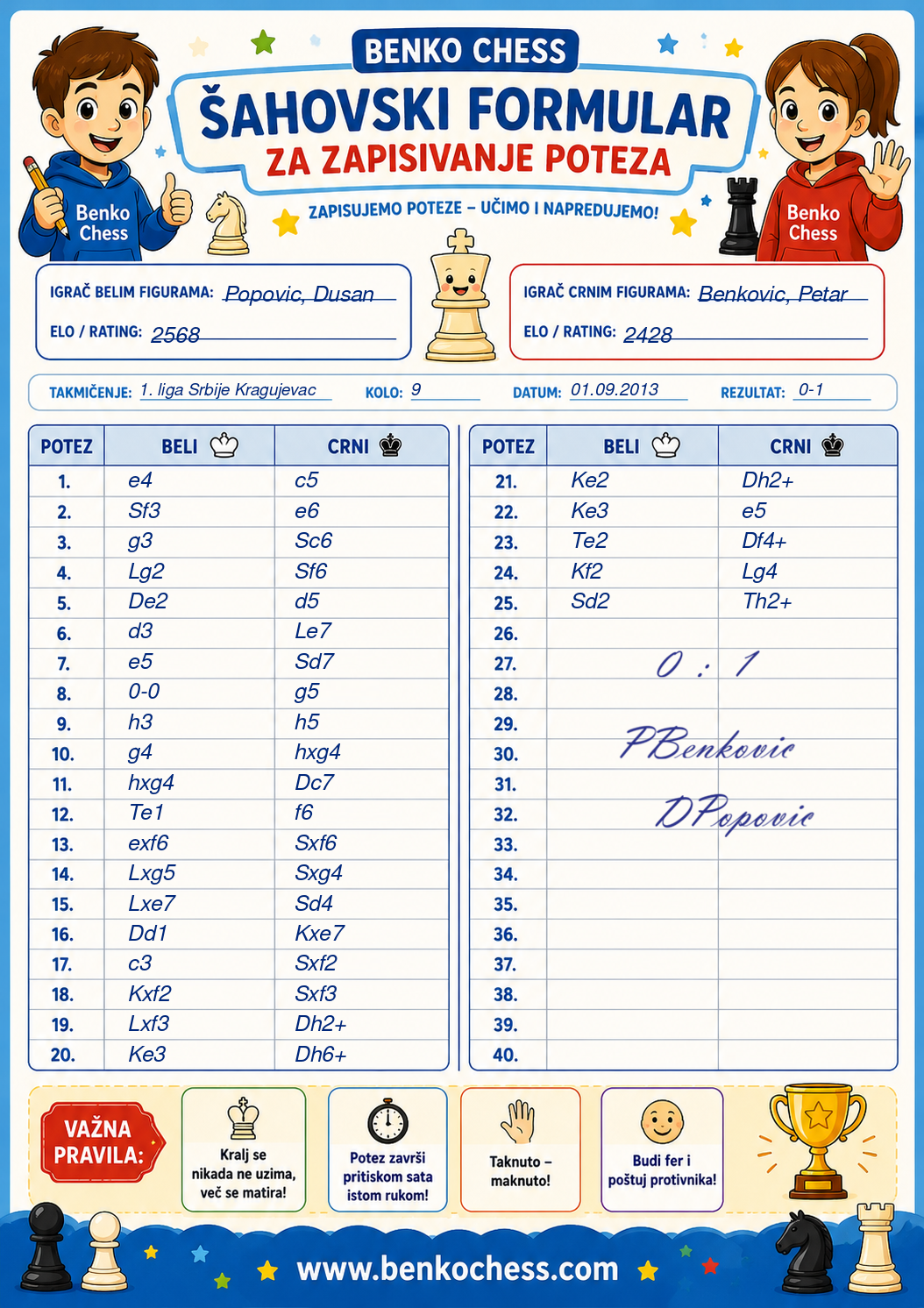
In tournaments with a standard time control, players record moves on a chess scoresheet. They record their own moves and the opponent’s moves in order, as clearly and legibly as possible. Each player may use the notation customary in their own country.
Do not write a move in advance. First make the move, then record it, except in special cases involving a draw claim.
The scoresheet should be visible to the arbiter during the game. If you offer a draw, write the symbol next to your move (=).
If a player is unable to record moves, an assistant should do so on the player’s behalf.
At the end of the game, both players check the recorded result and sign the scoresheet.
Players hand their scoresheets to an assistant arbiter or take them to the chief arbiter’s table.
The arbiter collects the scoresheets, compares the results and enters them in the standings and computer.
Chess literature often uses concise symbols that immediately show what is happening in a position: who stands better, whether there is an attack, who has the initiative, or whether a move is good, dubious or a mistake.
A symbol is not a substitute for thinking; it is a concise aid showing how an annotator evaluates a position or move.